






Most patients who were switched from adalimumab (Humira, AbbVie) to an interchangeable biosimilar experienced clinical success, with the vast majority remaining on a biosimilar three months after conversion, according to a study conducted at Brown University Health and presented in a poster (38-M) at the ASHP Pharmacy Futures 2025 meeting.
The study used data from the center’s electronic health records and specialty pharmacy from Jan. 1, 2023, to June 1, 2024. The primary objective was to evaluate the rate of reversion to the reference product three months after a payor mandated a switch to a biosimilar.
Specialty pharmacy dispensing data identified 32 patients (with a diverse range of inflammatory conditions) who met the eligibility criteria. Most of these patients (n=30) were switched to the interchangeable biosimilar adalimumab-bwwd (Hadlima, Organon and Samsung Bioepis), while the remaining two were switched to the interchangeable adalimumab-adaz (Hyrimoz, Sandoz).
At three months, 9% of patients had reverted to the reference product; 91% remained on biosimilars or transitioned to alternative products, reported Jack Mountain, PharmD, a PGY-2 ambulatory care pharmacy resident at Brown University Health.

Moreover, no patients required hospitalization during the study, and among the four patients using long-term oral corticosteroids, three had no change or a reduction in daily steroid dose, while one experienced an initial increase in steroid dose after switching to a biosimilar, Dr. Mountain reported.
The study’s overall takeaway aligns with interchangeability studies and the expectation that most patients should not need to switch back to the reference product, Dr. Mountain noted.
Nonetheless, since clinical studies for approval as an interchangeable biosimilar demonstrate no loss of efficacy when switching from reference product to biosimilar, “the 9% reversion rate was unexpected,” he said. “With 9% of patients experiencing flare symptoms within three months of switching to an interchangeable adalimumab biosimilar, and symptoms resolving upon returning to the reference product, this pattern may point to a ‘nocebo’ effect or patient perception influencing outcomes, rather than a pharmacologic difference.”
Such unresolved questions aside, “our study introduces a new metric and real-world data to demonstrate clinical success, and our findings emphasize the importance of patient education and provider support during biosimilar transitions.”
The sources reported no relevant financial disclosures.
Clinical Pharmacists Successfully Restart Pediatric Penicillin Allergy Delabeling
A pharmacist-led penicillin allergy delabeling program for pediatric patients is safe, feasible and effective, with nearly all of the patients deemed eligible for the antibiotic class after oral challenge testing, according to new data reported at the ASHP Pharmacy Futures 2025 meeting.
Parkland’s initial delabeling program was started in 2014 for inpatient adults only, noted Candice Mercadel, PharmD, an emergency department transition of care pharmacist at Parkland Hospital, in Dallas. In 2022, the program was expanded to pediatric patients in the hospital’s community-oriented primary care clinic. But that initiative was suspended due to staff turnover and lack of interest, she said.
In 2023, Dr. Mercadel launched a second pediatric delabeling clinic, which is ongoing. In the study presented at the ASHP meeting, Dr. Mercadel summarized key data from that first effort (Clinic 1) and the ongoing program (Clinic 2).
In Clinic 1, 30 of 32 tested patients were negative for sensitivity to amoxicillin, a penicillin-class antibiotic. There was one immediate reaction, and follow-up calls revealed one delayed reaction, she reported. In Clinic 2, the deprescribing team so far has tested 41 patients, 39 of whom tested negative; there was one immediate reaction and one delayed reaction. All reactions were mild, involving pruritus, nonspecific rash or delayed rash, and did not require medications.
As for the specifics of the delabeling program, patients (aged 2-17 years) at Parkland are prescreened for delabeling eligibility during well-child visits; cold calls are also made by a medical practice assistant from an established list. The lead pharmacist is trained on allergy assessment, testing protocols and emergency preparedness, and required to complete annual continuing education on antimicrobial stewardship, drug hypersensitivity, and allergy and immunology.
Allergy tests are conducted in a once-monthly group visit, with five patients per session. Testing involves a graded oral challenge using amoxicillin, and patients are monitored for 65 minutes. If there is no reaction, the patient is discharged, with a follow-up call to assess for delayed reactions after one week. The patient’s local pharmacy is then called to remove the allergy from the patient’s records.
The group testing model is efficient and scalable, Dr. Mercadel suggested, with the most challenging element being parent counseling. “They may have been very upset by what happened the first time that led to their child being labeled as allergic to penicillin. Maybe they went to the emergency room,” she said. “So we need to talk them through the process and explain that it is very low risk, and that the child probably had a viral exanthem rather than a true IgE [immunoglobin E]–mediated anaphylactic reaction.”
Getting these patients delabeled at an earlier age “helps their quality of life over the long term,” Dr. Mercadel added. “It helps to decrease adverse events, Clostridioides difficile infections, resistant pathogens and hospital lengths of stay, and allows us to provide patients with the most appropriate antibiotics.”
That reduced rate of C. difficile—a particularly lethal nosocomial infection—has been documented in previous research. For example, in a study by Turner et al (JAMA Netw Open 2021;4[5]:e219820), a pharmacist-led allergy assessment and penicillin testing program in a tertiary care hospital yielded significant reductions in hospital-acquired C. difficile infections (rate ratio, 0.61; 95% CI, 0.43-0.86).
The sources reported no relevant financial disclosures.
Pharmacist-Managed Diabetes Program Slashes Hemoglobin A1c Levels
A pharmacist-managed diabetes care program reduced hemoglobin A1c (HbA1c) levels from approximately 9.4% at baseline to 6.7% at “graduation,” according to the results of a poster (8-M) presented at the ASHP Pharmacy Futures 2025 meeting.
More than 60% of patients who successfully graduated sustained their HbA1c levels below goal at subsequent measurements, compared with 15% of those who were discharged for other reasons, reported Katherine Houlihan, PharmD, a PGY-2 ambulatory care pharmacy resident at Brown University Health, in Providence, R.I.
Pharmacists at Brown’s Center for Primary Care use a collaborative practice agreement model to manage their patients with diabetes. That approach, Dr. Houlihan noted, helps address the current shortage of primary care providers.
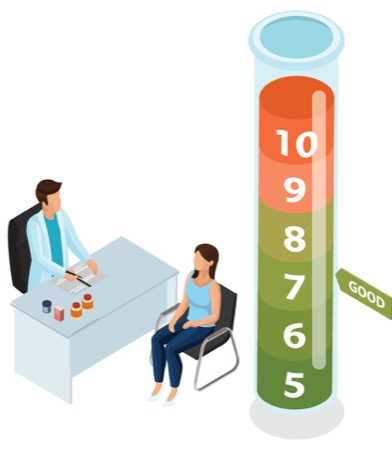
Nearly two-thirds of patients (n=51; 64.6%) met their individualized HbA1c goals within one year and graduated from the program. The average change in HbA1c from initial visit to discharge was –2.68% in patients who graduated and –0.47% in those who were discharged—quite significant, given that every 1% reduction in HbA1c translates into a 14% decrease in the risk for heart attack, a 16% decrease in the risk for heart failure and a 12% decrease in the risk for stroke (Cardiovasc Diabetol 2023;22[1]:62).
“We also found that pharmacist-managed care was able to decrease patients’ use of medications that pose more risks,” Dr. Houlihan said. She cited, as an example, sulfonylureas, which have been shown to cause hypoglycemia in up to 22% of hospitalized patients (Pharmacotherapy 2012;32[7]:613-617). Specifically, “the number of patients taking sulfonylureas in our study was cut in half, from nine to four, and patients on basal and bolus insulin also decreased.”
Dr. Houlihan and her co-investigators also found that demographic factors and social determinants of health had an impact on graduation rates and HbA1c goal maintenance. For example, a smaller proportion of patients who spoke Spanish (52.5% vs. 76.5%), were uninsured (61.1% vs. 65.6%) and were Hispanic/Latino (51.2% vs. 80.6%) achieved their HbA1c goals at discharge. “Additional resources are needed to increase graduation rates in patients with socioeconomic barriers including language, ethnicity and insurance coverage,” Dr. Houlihan said.
Study co-author Megan Scalia, PharmD, a clinical pharmacy coordinator, noted that Brown’s pharmacy has recently started providing pill packets labeled in Spanish. “I’d like to see if that has any effect going forward,” she said. “Our pharmacy also has delivery services available, which we would like to advertise more as a lot of our patients have transportation barriers.”
The sources reported no relevant financial disclosures.



This article is from the July 2025 print issue.