





Originally published by our sister publication Gastroenterology & Endoscopy News
A cross-sectional study of the 20 highest-ranked purported “liver-cleansing” products sold on Amazon found that they generated almost $40 million in annual revenue, yet their detoxification claims and ingredients were unsupported by data and, in some cases, these products caused adverse events.
“This study reveals a thriving market for liver supplements, despite limited scientific evidence supporting their efficacy,” lead investigator Ahmed Telbany, MD, MPH, a gastroenterology and hepatology fellow at the University of New Mexico, in Albuquerque, and his co-investigators wrote in the American Journal of Gastroenterology (2026;121[1]:171-178). “Healthcare providers should proactively discuss supplement use with patients, address the limited evidence supporting many liver supplements, and guide patients toward evidence-based interventions.”
The researchers gathered data from the online retailer on Sept. 16, 2024, identifying liver supplements, price, manufacturer details, sales, reviews, and customer ratings. They searched each ingredient in the products in PubMed, categorizing the quality of evidence and conducting Pearson correlation coefficients to determine what correlated with product sales.
Financially, the top 20 products did well, tallying 1.42 million annual units and $38.78 million in revenue, with a 12.3% year-over-year revenue increase. Monthly sales correlated with how long a product had been on the retailer’s website (r=0.53; P<0.01), price (r=–0.38; P<0.05), and the number of reviews (r=0.62; P<0.01). The average price per product was $27.30.
Marketing claims regarding these products were bold, the authors reported. All products promised to either “detox,” “cleanse,” or “eliminate toxins,” and 85% claimed to “enhance liver function.” In addition, 70% claimed they would “boost digestive health.” The number of reviews ranged from 204 to 38,910 per product, and the average product rating was 4.4 of 5 stars. Review authenticity—which was assessed using FakeSpot, a software that identify potentially fake reviews—averaged 73% (±20%), with higher review authenticity associated with higher sales (r=0.47; P<0.05).
“The high consumer satisfaction likely reflects placebo effects,” the investigators speculated. “The power of suggestion, combined with natural fluctuation of liver-related symptoms, could contribute to positive user experiences independent of physiological effects. Our evidence assessment showed that even the most common ingredients have limited scientific support.”
A subset analysis of only 1- and 2-star reviews (n=2,743) found that 62% cited a lack of effect; 19% noted side effects, including digestive discomfort, headaches, and skin reactions; 12% noted quality issues; and 7% were related to customer service problems.
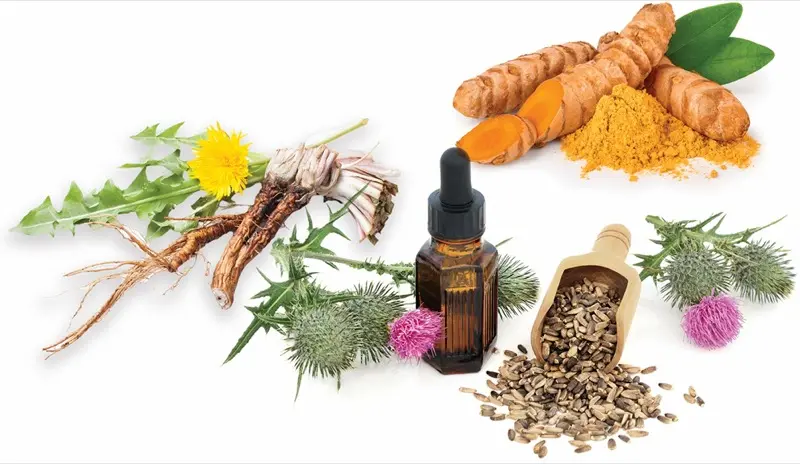
The most common ingredient in the analyzed products was milk thistle, which appeared in 19 of 20 products. This was followed by dandelion root (13) and turmeric root (13). Other, less common ingredients included zinc (12), beetroot (11), artichoke extract (10), choline (10), ginger (9), chicory (8), and berberine (7).
Evidence for ingredient efficacy was graded using a four-tier system, with tier 1 being high-quality. None of the products had supporting evidence graded as high-quality. Milk thistle, zinc, choline, and berberine were supported by tier 2 (moderate) quality evidence, and the rest had limited or very limited evidence (tier 3 or 4) to support clinical use.
Safety signals and regulatory gaps raised concern, the researchers noted. Specifically, herbal and dietary supplements account for about 20% of drug-induced liver injury cases in the United States (Hepatology 2017;65[1]:363-373). Adverse effects common to many of the ingredients in these products ranged from gastrointestinal discomfort to allergic reactions, with dose-dependent risks for several ingredients.
The investigators recommended “several policy improvements, including mandatory pre-market safety testing, standardized manufacturing practices, enhanced post-market surveillance, and requirements for scientific substantiation of marketing claims.”
—David Wild
Dr. Telbany reported no relevant financial disclosures.