





Compliance with smart pump dose error reduction software (DERS) was mired at around 85% at University Hospitals (UH), in Northeast Ohio, in 2021 when a medication safety team implemented a quality improvement initiative based on the principles of fractal management.
Within two years, the DERS compliance rate increased by 5 percentage points to more than 90% systemwide, based on a study of nine UH acute care hospitals. By the end of 2023, only 11% of hospitals were below 90%, compared with 70% two years earlier, according to Stacy Bratton, PharmD, a medication safety/drug information pharmacist at UH, who led the study, which was presented at ASHP Pharmacy Futures 2024, in Portland, Ore. (poster 44M). Nearly half were at 95% or higher—the goal set by the Institute for Safe Medication Practices (ISMP).
This year, the smart pump safety team has continued to push toward the goal of at least 95%, and the effort has yielded “incremental improvements,” Dr. Bratton said.
Although the study focused on UH medical centers employing the BD Alaris smart pump system, all hospitals, including those with different smart pump systems, “have at least one nurse and one pharmacist who collaborate and make sure information gets shared locally and who also share best practices within the system, which is a key pillar of fractal management,” she said.
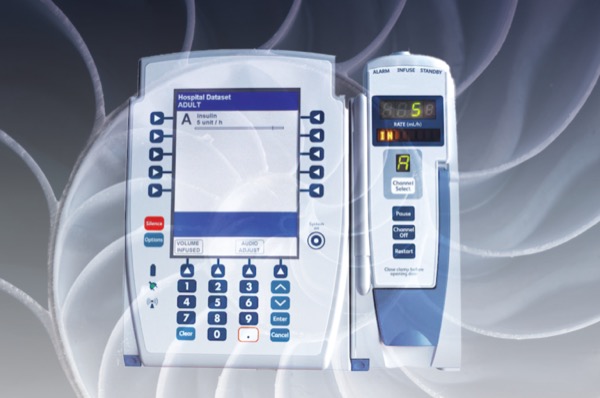
It’s Smart Pump Safety Week!
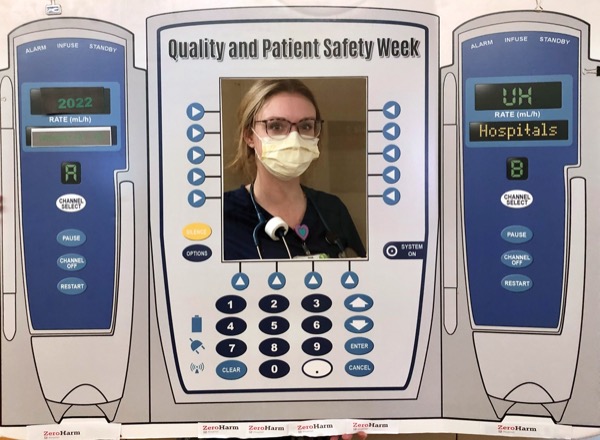
Several additional initiatives have been instrumental in the fractal program’s success, Dr. Bratton said. One was the launch of UH’s Smart Pump Safety Week initiative in 2022. Dr. Bratton said Smart Pump Safety Week was a way “to engage the front-line staff who actually program the pumps. We send out talking points to the nurse managers to review at their daily huddle.” One day the focus might be on DERS compliance, she added. The next day, it might be a setup of the pump or making sure not to leave any discontinued infusions on the IV pole.
What Is Fractal Management?

It’s a term borrowed from the way fractals in nature, like snowflakes, seeds in sunflowers and romanesco broccoli, tend to replicate their shapes no matter how small or large. In management terms, fractal organizations typically rely not on top-down dictates but on the creative efforts of small, agile units where imaginative solutions bubble up and generate scalable changes that are applicable organization-wide.
Peter J. Pronovost, MD, PhD, University Hospitals’ chief quality and clinical transformation officer, was among the first quality improvement experts to adopt the concept for healthcare organizations (J Health Organ Manag 2014;28[4]:576-586).
“It’s quick, digestible information, one bite at a time, just to put it at the forefront of everybody’s mind,” she said. During the two-week event, “we also encourage some kind of incentive, whether a coffee ticket or other reward, to make sure that they learn and also have fun.”
One of the goals has been to have the nurse manager or designee on each unit look at nurses’ individual performance at five pumps each month. “If they have a drug hanging, are they using the [BD Alaris Guardrails] safety function to reduce the risk for catastrophic dosing errors? Compliance is pretty high when they do those eyeball rounds.”
ISMP’s Take
Rita K. Jew, PharmD, MBA, the president of ISMP, said fractal management was an effective and adaptable tool for “[achieving] scalable changes in organizations.” Dr. Jew noted that ISMP has always advocated for the need to “leverage front-line staff” to report what’s going on and to “change processes to make it easier to do the right thing and harder to do the wrong thing.
“They are the ones,” she added, “with knowledge of the workarounds and obstacles that need to be removed” to improve the safety of technology like the smart pump. “When your peers are telling you stories about how using DERS prevented a significant medication error,” Dr. Jew said, “you’ll be more likely to adopt the practice to prevent what I call ‘fat finger’ errors” that result in an extra zero or misplaced decimal point.
Drs. Bratton and Jew reported no relevant financial disclosures.


This article is from the September 2024 print issue.