





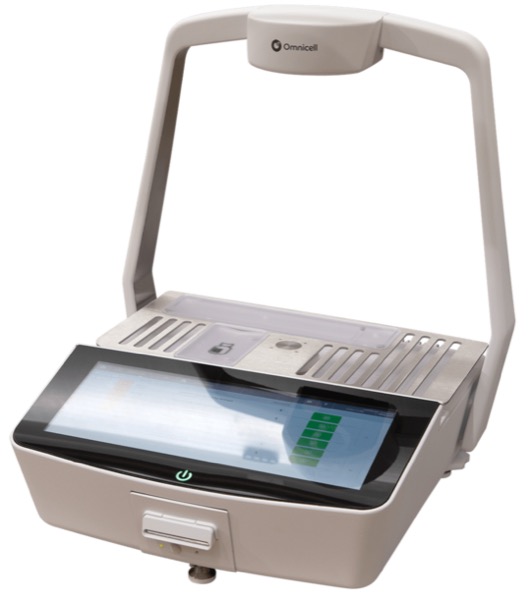
Over the past three decades, pharmacy robotic automated systems and IV workflow technology have evolved to become more compact, more affordable, faster and safer. They can significantly contribute to patient safety by improving filling accuracy with barcode technology, gravimetric controls, image recognition and automated monitoring. Robotic systems also reduce labor costs by handling repetitive tasks, enabling pharmacy staff to focus on more complex aspects of patient care.
But the journey to implementation of the optimal robotics for a particular pharmacy’s operations is not always a smooth one, as the experiences of two health systems in Massachusetts and Ohio demonstrate.
Brigham and Women’s Hospital
Brigham and Women’s Hospital (BWH), in Boston, has had a stop-and-start adoption path for its robotic and IV workflow technology. Caryn Belisle, RPh, MBA, BCSCP, CPEL, the hospital’s director of pharmacy regulatory compliance, quality and safety, highlighted lessons learned along that journey.
The journey began after a compounding error occurred about 15 years ago, Dr. Belisle noted. A collaborative case review at the time revealed that human error was involved. To prevent such errors, BWH implemented its first syringe-filling robot, the IntelliFill i.v. (Baxter).
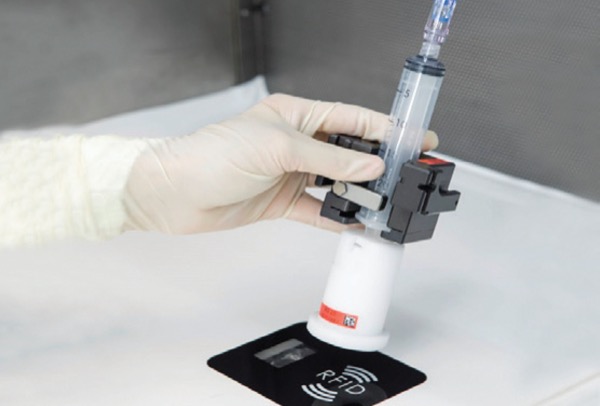
BWH assigned two certified pharmacy technicians with compounding experience to operate the device, Ms. Belisle said, which included managing the inventory, logging production and data monitoring. “The device was extremely efficient, highly reliable and had a great degree of customization, but it did have some drawbacks,” Ms. Belisle recalled. “It had proprietary syringes, so there was only one size syringe we could use, and the cap the system placed on the syringes was not tamper-evident, so they had to manually cap them all, which increased the workload.” Nonetheless, the program was generally successful—until the vendor stopped supporting the product, leading BWH to stop using it in 2014.
Between 2012 and 2017, BWH tried four additional robotic and automated compounding systems, including two generations of chemotherapy robots (CytoCare [Health Robotics] and i.v.Station ONCO [Omnicell]), an IV batch compounding robot (i.v.Station [Omnicell]), and an IV workflow assist device (i.v.Soft Assist [Omnicell]). All of them had expansive safety features, such as gravimetrics, barcode scanning and visual recognition, and interfaced with the hospital’s computerized provider order entry system, so no manual entry was required. But the robots also had similar drawbacks related to product availability and specificity, and difficulty mapping new products. Some of the robots could only stock and manipulate products with a single specific National Drug Code (NDC); if that product went into shortage, there would be a delay in production because an alternative to that exact NDC did not exist.
After eight years of efforts to optimize these systems, Ms. Belisle and her colleagues undertook a review to determine which ones had been most beneficial, tracking maximum production on each device (Int J Pharm Compd 2020;24[4]:346-351). “The two chemo robots didn’t really wow us with how much we were able to produce,” Ms. Belisle said. “The two that gave us the most bang for our buck were that first syringe robot, and the batch compounding robot we brought in after the first-generation chemotherapy robot.” (See sidebar for key takeaways from these early efforts.)
After experiencing so many challenges with early adoption of IV robots, BWH spent the six years from 2017 to 2023 without any such technology. “We were outsourcing a lot of our rocuronium syringes for the OR, and we felt like we could see some significant cost savings by bringing that in-house, so we decided to get back on the bike slowly, starting with one drug, one day a week and see how it went.”
In January 2023, the hospital acquired a newer-generation IV batch robot, KIRO Fill (Kiro Grifols SL) for the compounding of rocuronium, with one shift two days per week. “It has a small footprint and is configurable for both syringe and bag, has gravimetrics and barcode scanning, and removes the repetitive motion of manual compounding,” Ms. Belisle said. “It does still have a couple of drawbacks; for example, it doesn’t have a labeling function, so that’s still a manual process.”
In March 2024, BWH added an IV workflow assist device, IVX Workflow (Omnicell), that makes patient-specific doses, three shifts, seven days per week. “We picked [the 10 drugs] that we [most frequently prepare] on the most shifts, to see how successful we are,” she said. “Already our numbers are looking better than with the previous versions. We are taking baby steps, looking for the highest volume or the biggest cost-saving initiatives and starting there.”
Bon Secours Mercy Health
Another hospital system that has moved to implement more IV robotic technology is Cincinnati-based Bon Secours Mercy Health, a 49-hospital system that has integrated central pharmacy picking robots. Challenges to putting these systems in place include space logistics, inventory stock transition and timing, capital outlay, and automation downtime, said Brian Latham, PharmD, MBA, the executive director of pharmacy.
“For example, these robots weigh quite a bit, and we were placing them in some of our larger, older hospitals. So, in one location, we had to do floor load mitigation and put in a new beam to support the robot, and in others we did structural engineering to assess floor load capabilities,” he said.
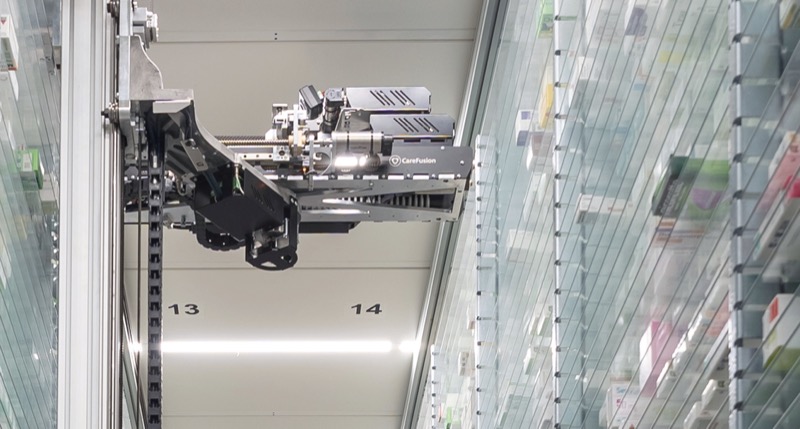
“We also had to consider factors like the layout of the robot and workflow, because these are very long systems with multiple modules, electrical requirements and database requirements such as interfaces with our ordering system, electronic health record and billing system.”
Dr. Latham shared data from one hospital in the Bon Secours system, the 480-bed Mercy Health – St. Elizabeth Youngstown Hospital. “There, the robot is dispensing approximately 4,600 doses per day on average, which represents approximately 80% of the doses that we are sending from the central pharmacy management inventory,” he said. “We have one carousel in place dispensing 20% of the inventory.”
A previous robot the hospital implemented had only about 198 line items, while the current supply robot carries approximately 600 items; all this inventory is also duplicated on shelves, for redundancy in case the robot should go down. “Over time, we have been able to increase the optimization of what the robot is capable of,” Dr. Latham said. “It’s currently running only about 40% of the time in a 24-hour period, so there is the potential for it to do even more.”
The sources reported no relevant financial disclosures. Portions of this article are based on a session at the ASHP Midyear 2024 Clinical Meeting & Exhibition, in New Orleans.

This article is from the June 2025 print issue.