





Originally published by our sister publication Specialty Pharmacy Continuum
By Marcus A. Banks
Insulin infusion calculators at the Cleveland Clinic Health System automatically account for the blood glucose values of patients in intensive care, before an infusion begins, as described in a new report in the Journal of the American College of Clinical Pharmacy.
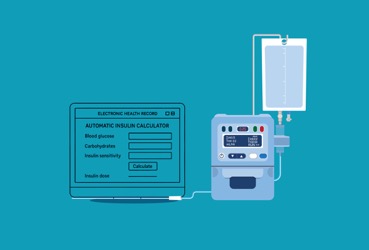
Intensive care nurses previously entered glucose values to calculate initial dose and dose adjustments manually, potentially with transcription errors that lowered the accuracy of the infusions.
“Pulling in the lab values automatically is novel,” said Alyssa Chen, PharmD, a critical care and informatics pharmacist at Cleveland Clinic. Other infusion calculators require manual entry of lab values, noted Dr. Chen, the study’s corresponding author (2025;1-9. doi:10.1002/jac5. 70012).
In 2021, Cleveland Clinic pharmacists led an effort to shift insulin infusion calculations from paper-based systems to a standardized calculator available in the electronic health record (EHR). Before the shift, each of the system’s 29 intensive care facilities used its own paper nomograms, which nurses used to perform manual calculations for dose adjustments; many facilities noted safety concerns related to this practice.
Then in 2023, pharmacists led an effort to create an insulin calculator within the EHR that automatically imports lab glucose values into the medication administration record (MAR) and, with a single click, performs the needed mathematical calculations to provide the recommended dose adjustment.
The new report compares the experience of 109 intensive care patients whose insulin infusions were based on manually entered glucose levels (pre-implementation) with 97 whose insulin infusions were derived from imported lab values (post-implementation). Dr. Chen and colleagues found that significantly more people in the post-implementation group had glucose levels within the target range of 140 to 179 mg/dL following their infusions (post-implementation, 35.5%; pre-implementation, 31.0%; P=0.02). That target guideline derived from recommendations from the American Diabetes Association (Diabetes Care 2022;45[suppl 1]:S244-S253) and Society of Critical Care Medicine (Crit Care Med 2012;40[12]:3251-3276).
The incidence of hyperglycemia also decreased after implementation. Of the 1,237 blood glucose levels captured pre-implementation, 601 (48.6%) were hyperglycemic. After implementation, 549 of 1,256 glucose levels (43.7%; P=0.02) were hyperglycemic.
“We collaborated with nursing colleagues throughout the entire project,” Dr. Chen said, starting from the shift to a standardized paper nomogram across the enterprise in 2021 to the implementation of the MAR calculator in 2023.
It was not a smooth transition. Sometimes a lag of a minute or two occurs between when a bedside glucose reading is taken and when the lab value imports to the calculator, Dr. Chen noted. During that interval, there could be a delay in adjustments to the insulin infusion; in the paper era, a nurse could have already adjusted the infusion.
“It can be hard when you see the glucose value right there,” she said. Despite that wrinkle, the project has been successful.
“Overall, nurses have adopted the workflow and are reporting they really like it,” Dr. Chen said, because the calculator simplifies many decisions about adjustments to insulin levels that nurses had been required to make in real time using paper calculations.
Dr. Chen reported no relevant financial disclosures.