





Ensuring that your compounding facilities are in compliance with USP General Chapters <797> and <800> can make any pharmacist wonder whether they need to return to school for an engineering degree to understand the concepts involved with cleanroom build-outs and renovations. Elaine Strauss, PharmD, MS, BCSCP, the senior managing consultant for cleanrooms and sterile compounding at WorkingBuildings, an engineering, commissioning, regulatory and design firm based in Atlanta, and Tony Martin, PE, the firm’s director of healthcare commissioning, offer six key areas to explore with engineers and other vendors as you’re working on these pharmacy cleanroom projects.
Q1. Heating, ventilating and air-conditioning systems are critical to all cleanrooms. What HVAC concepts are important to understand when working with engineers and vendors?
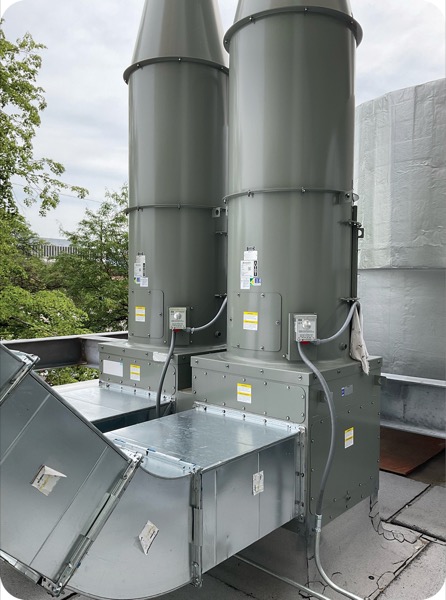
First, you need to know what systems you have in place. Perform a gap analysis to determine the current state of the space and HVAC systems, along with what it will take to bring them up to current standards. Do you have a dedicated air handler unit (AHU) serving the cleanrooms? Ideally, you want to have a dedicated AHU and exhaust fan for the cleanroom spaces. Work closely with your facilities and engineering department to determine the current state. In many cases, facilities and engineering also will want dedicated systems for your cleanroom because it will be easier to dial in the specific environmental conditions and set points with a dedicated system.
Next, check the type of HEPA filters that are used in the ceiling of the cleanroom. Are they FFUs (fan filter units) or HEPA diffuser units? The FFU has a built-in motor that is located right on top of the HEPA filter and helps to push additional air through that filter, whereas a HEPA diffuser unit just sits in the ceiling, and all the air is coming from your AHU.
Also be sure to determine which HEPA filter you need. Choosing a filter depends on the design of the engineering system and the space you have above the ceiling. Make sure there is sufficient air to create the required air changes and there is sufficient pressure developed by the system to result in the required differential air pressure at each door, and that the direction of flow is correct. The FFU is a costlier item, and oftentimes it will be “value engineered” and replaced with a HEPA diffuser. But that may not be the right choice, given the amount of air supplied from the AHU in place. That’s why, when building or renovating a cleanroom, you want to work with an experienced engineering design team that recognizes the importance of equipment design.
Air valves are another important component of the HVAC system because they allow for precise airflow measurement and have built-in resilience to always maintain constant airflow. Venturi-shaped air valves have highly accurate plungers; however, they sometimes can get value engineered or replaced for a cheaper version of a similar but not equivalent air valve. The important thing to remember: Not all components are created equally.
Q2. Why is redundancy of HVAC systems so important, and how do you assess what level of redundancy you need?
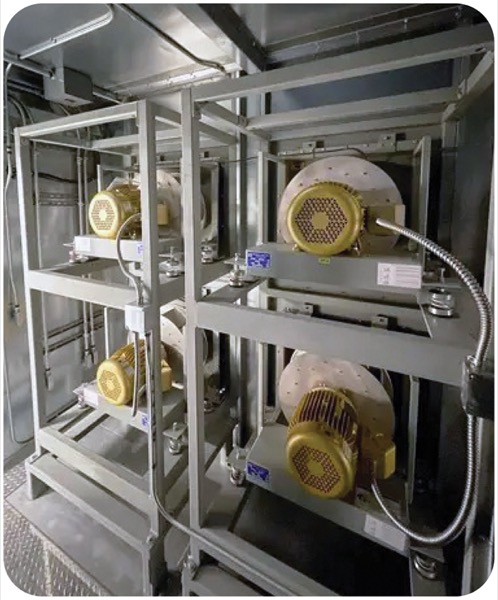
When you don’t have proper redundancy, a single component failure can lead to shutdowns. Different levels of redundancy in terms of infrastructure and mechanical systems make sense for different institutions. Redundancy practices could include multiple supply and return fans, two exhaust fans, and four compressors in your air-cooled chiller, along with backup chilled water connections. Another consideration for determining redundancy is whether there are other compounding locations at your facility where you could shift operations if your cleanroom went down. If you don’t have another satellite cleanroom where you might be able to shift operations in an emergency, then you might need to have a higher level of redundancy backup than a site that has multiple satellite cleanroom locations.
For example, if you are working in a medical office building that’s not a 24/7 facility, your redundancies may not need to be as extensive as in a tertiary care hospital. However, you also may still have very expensive medications being stored. Let’s consider as an example a community-based oncology infusion center compounding cleanroom located in a medical office building. You are likely storing some pretty expensive drugs that require refrigeration, so that medical office building needs to have generator backup power and remote temperature monitoring for all cold storage.
Let’s dig a bit deeper into supply fans, which provide clean air to the pharmacy through the HEPA filters, and exhaust fans, which are required to exhaust more air out than is being put in to create negative pressure for the hazardous drug rooms. In many situations, sites have only a single supply or exhaust fan installed instead of redundant fans. Now, increasing the level of redundancy also increases cost, and it doesn’t always make sense to put in a Cadillac everywhere. But these are risk-based conversations that need to occur during the design process.
We often hear from pharmacy managers who struggle with getting their temperatures and pressures under control. They’re having lots of excursions, where every couple of weeks their temperature or humidity goes out of range, and maybe their differential air pressures are reversed. That may mean that your AHU is running at 100% capacity and you need additional backups. When you are looking at renovation or building a new space, just like you would never want to design a space to have the minimum air changes per hour—30 in an International Organization for Standardization (ISO) 7 room or 20 in an ISO 8 room—you never want to have an AHU that is running at capacity. Typically, that occurs more so with older sites and older AHUs. Working closely with the facilities department and engineers who can identify the current engineering capacity of your HVAC systems will really help to identify whether short-term solutions can be put in place or whether a new AHU is truly needed. (As for what the various ISO classifications mean, a good overview is at bit.ly/4gUts57.)
Q3. What kinds of short-term solutions might be possible in such a situation? And how do you know whether that will be enough?
In one particular project we recently worked on, a temporary direct expansion or a “DX” unit is one option that has been suggested as a bandage to serve the ISO-classified spaces in a site where the HVAC AHU is running at capacity. Installing a brand-new AHU is a much more expensive project that involves a lot more capital dollars and higher-level approval, so a temporary option like this can buy time until those funds are available.
Q4. What is involved with maintaining positive and negative airflow gradients?
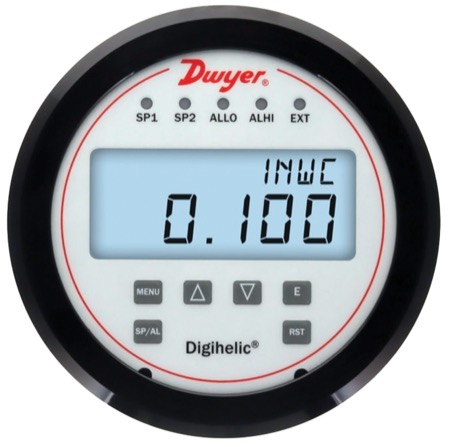
Negative pressure rooms are extremely challenging to maintain, because of that very narrow pressure differential window of –0.01 to –0.03 inches of water column. Consistently achieving that is difficult. You want to make sure that you have some airflow that’s able to either supply and escape up underneath the doorway, and what we often find is that the adjustable door gap has created too tight of a cleanroom, with no place for air to escape and no ability to maintain those pressure gradients. You want a little bit of space under the door to allow for those natural gradient resolutions to occur, especially after opening the door and closing it. Whenever changes are made, even a change of pressurization out in the workroom, it all is a cascade. So, if you’re having issues in one place, make sure that you’re also looking at your buffer rooms and your anteroom and potentially your nonclassified workroom to see whether those issues are related. The test and balance contractors or engineering design teams cannot make a change to the workroom pressures without it affecting the cleanroom spaces; they are connected.
Q5. What are some of the cost management and budgeting issues involved with these systems?
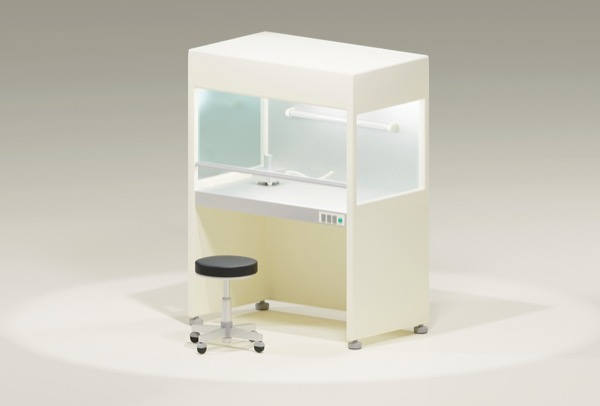
Achieving all of these cleanroom engineering goals involves some big-ticket expenditures. The average life span of these AHUs, for example, is approximately 20 to 25 years, while the average life span of primary engineering controls—whether it’s your laminar flow hood or biosafety cabinet—is about 10 to 15 years. After that time, most suppliers have moved on to newer models and they may not be able to support your engineering control device. Even if they just renovated five years ago, some sites we work with are already getting ready to renovate again. That’s why it’s so important to plan ahead on budgeting. If your primary engineering control is already eight or nine years old and you know you’ll want to be replacing it in three to five years, it’s time to be monitoring what’s out there and working with cost-estimating companies to put together a spending plan. That way, you’ll have those proposals in your back pocket and be more proactive rather than reactive. Certainly, if you’ve got a 20-year-old AHU, it’s time to start waving the red flag and say you don’t have much life expectancy left.
But that’s an extreme case. Even if you have equipment that you know will reach the end of its life span in five to seven years, make sure that you’re budgeting ahead for those items because they’re not cheap. There’s no way around it. The good news is once you have new equipment in place, you are less prone to downtimes. That’s a major plus, because downtimes result in additional work, delay patient care and create a lack of environmental control. These stoppages are challenging to overcome without halting operations; creating bottlenecks; and incurring additional costs associated with environmental monitoring, tests and samples, and re-cleaning.
Overlaid on all of this is the anticipation of the explosion of gene therapy in infusion center services, both in the inpatient and outpatient settings. Sites will need to be prepared with the increased capacity to handle that as well. We want to make sure we can provide the best care possible, and that requires the best compounding facilities.
Q6. Is there a benefit to a chilled water or DX AHU?
Chilled water is definitely preferred for its simplicity. However, this is all subject to the facility and system’s ability to provide a reliable source of low-temperature water year-round. This all has to be served on emergency power as well. If chilled water isn’t an option, DX cooling coil units can be used, which are similar to what are used in residential systems. The key thing to remember is designing the cooling capacity based on the hottest and most humid day of the year rather than just the hottest day of the year. You want to ensure that your system is designed to remove the right amount of moisture to maintain the humidity levels in your cleanrooms. Mild days or “shoulder” seasons also can create a challenge with these systems; they need to be designed with a high level of modulation to control for a wide range of outdoor conditions.
The sources reported no relevant financial disclosures beyond their stated employment.
This article is from the April 2025 print issue.