





By David Bronstein
Hospital networks exploring an entry into specialty pharmacy (SP) can learn valuable lessons from Temple Health, in Philadelphia. Launched just two years ago, Temple’s integrated SP program has achieved several key milestones, including patient and provider satisfaction scores of at least 96%, nearly universal access to limited drug distribution (LDD) networks, and a whopping 641% increase in SP prescription capture.
Those successes came despite a very challenging patient population, noted Jeff Karcsh, PharmD, Temple Health’s assistant vice president of retail/SP operations, at the NASP 2024 Annual Meeting & Expo, in Nashville, Tenn. Most of the 750,000 people who live in North Philadelphia rely on Temple Health for their medical care, he noted. But nearly 65% of those patients have annual household incomes of less than $20,000, and 45% of them live below the federal poverty level.
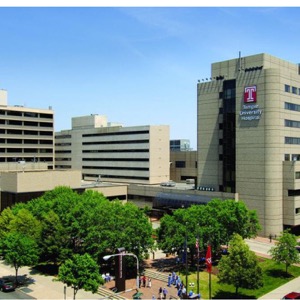
“Those are staggering numbers,” Dr. Karcsh said. “Here we are, with a large strategic network of hospitals in the community, with some of the best doctors in the nation. Yet our local patient population was desperate for better medical care, and we had no in-house specialty pharmacy to address these gaps.”
As pharmacy leaders, “this was our opportunity to drive change and make a difference, not just for the health system but also for the patients in the communities we serve. That was why we decided to open a truly integrated, health-system–based specialty pharmacy program.”
The Temple SP build-out was done with Omnicell—a partnership first profiled in the September/October issue of Specialty Pharmacy Continuum. During the NASP 2024 session, Dr. Karcsh and his co-presenter, Damon Albert, PharmD, Omnicell’s regional director of pharmacy operations, delved into the primary mission of the program and also presented recently updated metrics used to gauge its success.
“The mission was to have our integrated specialty pharmacy serve as an extension to our providers’ visits with specialty pharmacy patients,” Dr. Karcsh said. “We wanted all of the providers in our many clinics to feel like we were part of that visit, albeit virtually, helping to guide them when the decision was made to write a specialty medication.”
Temple Health used a multipronged approach to deliver on that mission, with a critical first step focused on gaining buy-in from the C-suite. Dr. Albert stressed the importance of such support. “These executive leaders can be a huge help by reaching out to providers who may be lagging in adoption, and urging them to pull in the same direction as us,” he explained.
The next step was to develop the core SP capabilities that are so crucial to success in this space, with accreditation being a prime example. Success in that key metric came fast: The program achieved both URAC and ACHC (Accreditation Commission for Health Care) accreditation just nine months post-launch, Dr. Karcsh noted.
Temple Health also forged strong partnerships with pharmacy services administrative organizations. These somewhat under-the-radar but powerful collective groups negotiate payor contracts and helped Temple Health gain access to a wide range of commercial and Medicare D plans.
As noted, Temple Health also scored major gains in LDD network access, recently hitting 97.3% inclusion. Given how restrictive some of those drug distribution contracts were to health-system–owned SPs just a few years ago, “that’s a pretty impressive level of market penetration,” Dr. Albert emphasized.
Speeding Access to Therapy
But Dr. Karcsh noted that none of these contract successes would amount to much if Temple’s SP program failed at “job one”: getting a prescribed medication to the patient in a timely manner. Before the launch of the program, he noted, this was a major challenge. “We had extremely slow turnaround times and a huge rate of medication abandonment,” he said. Although there were many causes, one factor was the lack of integrated SP support. “When these scripts went to external specialty pharmacies, we knew they were providing some minimal patient counseling and support. But it wasn’t coming from Temple, and it wasn’t coming from our staff. So the quality and consistency just wasn’t there.”
As a result, “patients had no idea what the disposition of their prescription was. Where did it go? Who was filling it? When will I get it? They were kind of lost.”
By bringing patient and provider support services in-house, powered in part by robust electronic medical records integration and direct communication with providers, the Temple Health SP team quickly overcame the challenges that previously made new specialty prescriptions such a shot in the dark. As a result, several key metrics on prescription turnaround improved significantly:
• time from prescriptions written to pharmacist review: one hour;
• time from prescriptions received to prior authorization (PA) submission: one day;
• time from PA submission to determination: two days; and
• same-day courier or next-day air via prescription delivery via integrated shipping.
Before these specialty medications are in the hands of patients, a proactive outreach is required to provide education and other support efforts to ensure medication adherence. A variety of metrics can be used to measure the success of those efforts, but proportion of days covered (PDC) is one of the most preferred by managed care experts. The current PDC rate of Temple across its major SP drugs is 99%, Dr. Karcsh noted.
Those PDC scores would not be nearly as high if the Temple Health SP program did not have strong financial support strategies, including accessing manufacturer copay cards for commercial/private payors and grant and foundation funds for Medicare Part D patients. The financial assistance team also helps low-income older patients access the Pharmaceutical Assistance Contract for the Elderly (PACE) program. PACE works with a wide variety of commercial and federal health plans to lower out-of-pocket costs for medications.
Perhaps not surprisingly, this deep level of patient and provider support is reflected in Temple Health’s satisfaction scores; at the most recent reporting period, scores reached 97.5% and 96%, respectively. Both of those scores exceeded the team’s expectations, Dr. Karcsh said.



From September 2022 through June 2024, he noted, several additional key performance metrics improved significantly, indicating that Temple Health’s SP program “was delivering on its mission."
• Specialty prescriptions increased from 326 to 2,418 (+641%).
• Narrow-network prescription refills increased by 34%.
• The number of specialty patients served increased from 265 to 1,965 per month (+641%).
Looking forward, further successes are expected, “including filling specialty prescriptions for our health-system employees,” Dr. Karcsh said. “That number probably will reach about 64% or higher once we get a second Medicaid contract we are aiming for. So we’re looking forward to that additional growth.”
The sources reported no relevant financial disclosures.