





Originally published by our sister publication Infectious Disease Special Edition
By Gina Shaw
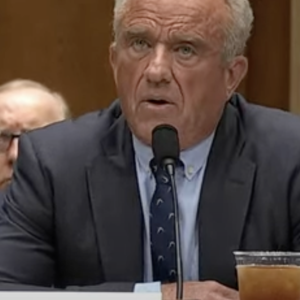
All 18 members of the CDC’s Advisory Committee on Immunization Practices (ACIP) who were abruptly dismissed by Health and Human Services Secretary Robert F. Kennedy Jr. on June 9 have issued a joint letter declaring that the decision has left the U.S. vaccine program “critically weakened.”
Published in JAMA online on June 16, 2025, the letter described the rigorous process that historically has been associated with selecting ACIP members, the public trust placed in ACIP by healthcare providers and the public, and the extraordinary accomplishments of the U.S. vaccine program. It noted that the routine vaccination of approximately 117 million children between 1994 and 2023 likely prevented an estimated 508 million lifetime cases of illness, 32 million hospitalizations and nearly 1.13 million deaths at a net savings of $540 billion in direct costs and $2.7 trillion in societal costs (MMWR Morb Mortal Wkly Rep 2024;73[31]:682-685).
“As former ACIP members, we are deeply concerned that these destabilizing decisions, made without clear rationale, may roll back the achievements of US immunization policy, impact people’s access to lifesaving vaccines, and ultimately put US families at risk of dangerous and preventable illnesses,” the letter warned. “Vaccines and the anti-RSV [respiratory syncytial virus] monoclonal antibodies are lifesaving, and people in the US deserve to have recommendations and broad access to use them to prevent serious diseases.”
One of the co-authors, Noel Brewer, PhD, the Gillings Distinguished Professor in Public Health at the UNC Gillings School of Global Public Health, in Chapel Hill, N.C., learned that he had been dismissed from ACIP when he read the Wall Street Journal editorial Mr. Kennedy published announcing the decision. “The firing of ACIP members undermines vaccination in the U.S. It will make it much harder for healthcare providers to do their jobs,”
Dr. Brewer told Infectious Disease Special Edition. “And it’s going to complicate the work of insurance companies in deciding what to pay for. Ultimately, kids and adults will pay the price through sickness and death.”
On June 10, the American Medical Association (AMA), supported by dozens of other health organizations including the Infectious Diseases Society of America, issued an emergency resolution urging Mr. Kennedy to reverse the dismissal of the original ACIP members and calling for the AMA to “initiate sustained public advocacy” in support of the current ACIP structure to “identify and evaluate alternative evidence-based vaccine advisory structures and invest resources in such initiatives, as necessary.” The resolution also directed the AMA to immediately send a letter to the Senate Committee on Health, Education, Labor and Pensions requesting an investigation into Mr. Kennedy’s actions.
After the new members were named, the AMA issued an additional statement voicing concern that new members were selected to ACIP “without transparency and proper vetting to ensure they have the expertise necessary to make vaccine recommendations to protect the health of Americans,” said AMA President Bobby Mukkamala, MD. “We urge the Administration to reconsider the removal of the 17 ACIP members who have deep expertise in vaccines so physicians can continue to have confidence in ACIP’s recommendations, which have for decades helped them make recommendations to patients about vaccination.”
Judge Rules in Favor of Researchers
In other federal policy news, U.S. District Judge William Young on June 16 ruledthat the National Institutes of Health violated federal law by arbitrarily canceling more than $1 billion in research grants because of perceived connections to diversity, equity and inclusion initiatives and LGBTQ+ issues.
In an oral opinion reinstating the grants to organizations and Democratic-led states that had filed the suit—and suggesting that he could issue a broader decision—the Reagan-appointed judge said that in four decades on the bench, he had “never seen a record where racial discrimination was so palpable.
“This represents racial discrimination and discrimination against America’s LGBTQ community,” he said. “Any discrimination by our government is so wrong that it requires the court to enjoin it and at an appropriate time, I’m going to do it.”
C. Michael White, PharmD, the department head and Board of Trustees Distinguished Professor of Pharmacy Practice at the University of Connecticut, in Storrs, praised the judge’s ruling. “While it is under the purview of the National Institutes for Health to determine funding priorities going forward, it is indefensible to cancel projects that have already been awarded to investigators simply because the projects may or may not differ from those that the presidential administration would like to support,” said Dr. White, who is a member of the editorial advisory board of Pharmacy Practice News.
“The speed with which the funded grants were canceled and the ‘flimsy’ reasons substantiating the cancellations suggest that the NIH did not do its due diligence to fully vet the projects and to determine the ramifications of their actions.”
Dr. White explained that committed funds are used by institutions and primary investigators “to make promises to research personnel, community partners and graduate students that cannot be easily undone. Abruptly canceling projects because they used the term ‘women,’ like with the Women’s Health Initiative, is not sufficient reason for cancellation.” It is also wasteful because the results to date on existing studies could be compromised, he added.
“Questioning vaccine safety and effectiveness and then dramatically slashing ongoing grants to vaccine researchers suggests that the Department of Health and Human Services is not really interested in finding out the answers to whether vaccines are safe, but wants to stifle information that might not fit their preconceived notions,” Dr. White said.
Dr. White said the abrupt cancellation of research grants, viewed in context with other sweeping administration actions that have been challenged in court, feels like a political weapon against institutions of higher learning.
“Announcing the immediate and dramatic cut in indirect cost rates for all institutions without actually cutting the federal mandates that were the reasons the costs were driven up in the first place shows that the decisions are either being made out of ignorance or in an attempt to consciously destroy the research enterprise, which would be horrible news for all Americans seeking new treatment options or new ways to protect vulnerable communities.”
According to an open letter released June 9, 2025, signed by several hundred NIH employees (including several from the National Institute of Allergy and Infectious Diseases) since Jan. 20, 2025, NIH has terminated 2,100 research grants totaling around $9.5 billion and $2.6 billion in contracts).
These terminations, the authors wrote, throw away years of hard work and millions of dollars. “Ending a $5 million research study when it is 80% complete does not save $1 million, it wastes $4 million,” said the letter, dubbed the “Bethesda Declaration.” It went noted that the terminations also “shirk commitments to participants, who braved personal risk to give the incredible gift of biological samples, understanding that their generosity would fuel scientific discovery and improve health”; risk the health of participants when trials are halted, cutting off access to medications or leaving participants with unmonitored device implants; and damage hard-earned public trust in the NIH. In addition to the employee signatories, more than 27,000 individuals have cosigned the letter to add their support as of June 18, 2025, including nearly 70 Nobel laureates.
The federal government is exploring its options to appeal Mr. Young’s ruling, said an HHS spokesperson. “HHS stands by its decision to end funding for research that prioritized ideological agendas over scientific rigor and meaningful outcomes for the American people,” Andrew Nixon said in a statement. “HHS is exploring all legal options, including filing an appeal and moving to stay the order.”