





Originally published by our sister publication Infectious Disease Special Edition
By Marie Rosenthal, MS
The CDC’s Advisory Committee on Immunization Practices (ACIP) recommended the use of meningococcal groups A, B, C, W and Y vaccine (MenABCWY; Penmenvy, GSK) as part of the adolescent meningococcal vaccination schedule to protect against disease-causing serogroups of Neisseria meningitidis (A, B, C, W and Y).
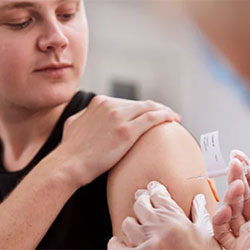
On Feb. 14, the FDA approved GSK’s MenABCWY vaccine, which combines the antigenic components of the company’s two meningococcal vaccines: Bexsero (meningococcal group B vaccine) and Menveo (meningococcal [groups A, C, Y and W-135] oligosaccharide diphtheria CRM197 conjugate vaccine). GSK’s MenABCWY vaccine is indicated for people ages 10 through 25 years of age.
ACIP voted to recommend that individuals 16 to 23 years of age receive a single dose of MenABCWY as an alternative to separate administration of meningococcal serogroups A, C, W and Y as well as meningococcal serogroup B (MenB) vaccinations when both would be given on the same clinic time under shared clinical decision-making. ACIP also recommended the combined vaccine in people 10 and older who are at risk for meningococcal disease because of immunocompromising conditions, such as persistent complement deficiencies, complement inhibitor use or functional anatomic asplenia. The vote was unanimous.
The recommendation would allow the coverage of more serogroups with fewer vaccine doses, which could improve immunization rates among adolescents and young adults. Although MenB is the leading cause of invasive meningococcal disease (IMD) among this population, fewer than 13% of 17-year-olds received the recommended two-dose vaccination series; around 32% received at least one dose according to 2023 CDC survey data.
Although uncommon, IMD can lead to death for up to 1 in 6 of those who contract it in as little as 24 hours from onset—even if they are treated. Approximately 1 in 5 survivors may experience long-term consequences such as neurologic deficits, amputations, hearing loss and nervous system problems. Although anyone can get IMD, adolescents and young adults between 16 and 23 years of age are one of the groups at the highest risk due to common behaviors that help transmit the bacteria that cause IMD, such as living in college dormitories, kissing, and sharing drinks, utensils or smoking devices. IMD is easily misdiagnosed, with early symptoms often mistaken for the flu.
The introduction of meningococcal vaccines has greatly reduced the incidence of IMD, according to Jamie Loehr, MD, a practicing family physician in Rochester and Ithaca, N.Y., and the chair of the Meningococcal Vaccines Work Group. In 1996, before the introduction of meningococcal vaccines, the incidence was 1.2 cases per 100,000 population. In 2024, after the introduction of MenABCWY and MenB vaccines, the incidence was 0.15 cases per 100,000 population, he explained.
GSK’s MenABCWY vaccine is an injectable suspension for intramuscular use. The vaccine is supplied as one vial of lyophilized MenABCWY powder that is reconstituted at the time of use with the accompanying prefilled syringe of MenB component (liquid). It is indicated in the United States for active immunization to prevent invasive disease caused by N. meningitidis serogroups A, B, C, W and Y in individuals aged 10 through 25 years.
Recommendations made by ACIP are sent to the director of the CDC, and if adopted, are published as official CDC recommendations.