

Originally published by our sister publication Infectious Disease Special Edition
Note: The Infectious Diseases Society of America with other organizations are expected to issue a statement about the withdrawal. This story will be updated when they do.
By Gina Shaw
Leaders in public health and infectious disease expressed alarm at the Trump administration’s decision to withdraw the United States from the WHO via an executive order, one of his first actions after being sworn in as president on Jan. 20, 2025.
"This is a very bad decision. It undermines the nation’s ability to be forward-thinking and coordinate with other nations on a whole range of health threats, to prevent them or mitigate them early in their presentation,” said Georges H. Benjamin, MD, the executive director of the American Public Health Association (APHA) in an interview with Infectious Disease Special Edition. “Furthermore, by eliminating the dues that we give to the WHO as a member, it cripples the organization and makes it less effective. It’s a double whammy: We pull our involvement away and undermine their ability to do work that helps us as well as other nations. The health threats to our nation are numerous, and this prevents us from getting ahead of them."
Mr. Trump attempted to pull the United States from the WHO near the end of his first term in July 2020, at the height of the COVID-19 pandemic, but then-President Joe Biden blocked the order immediately after he took office in January 2021. The new order cites the agency's "failure to adopt urgently needed reforms, and its inability to demonstrate independence from the inappropriate political influence of WHO member states," as one reason for leaving.
The new order gives a 12-month notice period for the U.S. to leave the organization and stop all contributions to its operations.
In addition, the order says the United States pays too much to be a member. "In addition, the WHO continues to demand unfairly onerous payments from the United States, far out of proportion with other countries’ assessed payments. China, with a population of 1.4 billion, has 300 percent of the population of the United States, yet contributes nearly 90 percent less to the WHO," the executive order said.
The United States is not the largest contributer to the WHO. Germany, the Bill & Melinda Gates Foundation, the United Kingdom and the European Commission are among the top contributers.
The money spent is a worthwhile investment, according to Stephen Morse, PhD, a professor of epidemiology at Columbia University’s Mailman School of Public Health, in New York City. “WHO has proven its value over the years, in every area of global health. With a budget smaller than many large hospitals in the U.S., the return on investment is tremendous,” he told IDSE. “If we didn’t have a WHO, we’d have to invent one, and it seems counterproductive to reinvent the wheel. I can remember when several countries, including the U.S., tried to develop a WHO alternative in the 1990s, and it never got off the ground. We could learn a lesson from that.”
"While there is always room for improvement, and there are political pressures on the WHO, it remains the only existing mechanism for global health standards and communication, according to Dr. Morse. "Without WHO, we’re flying blind. Nowhere is this truer than with infectious diseases. How else would we know the global status of mpox, or even flu?” he pointed out. “If we had to depend on countries coordinating their reporting and response through their own mechanisms, the political issues would become even greater. There are major advantages to established and trusted networks.”
As an example, Dr. Morse cited the WHO’s Global Influenza Surveillance and Response System (GISRS), which continuously characterizes flu viruses throughout the world, and is critical for updating influenza vaccines each year. “GISRS is over 70 years old and still growing in capability,” he said. “For example, they’ve added capability for sequencing the viral genome and specific variants, and using the genetic data for ‘genomic surveillance’ (mapping where each of these variants is circulating)-increasingly critical but too resource-intensive for most low- and middle-income countries.”
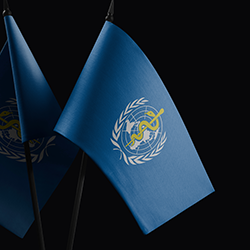
A statement from the WHO, posted to its website on Jan. 21, urged the administration to reconsider the move. “The World Health Organization regrets the announcement that the United States of America intends to withdraw from the Organization. WHO plays a crucial role in protecting the health and security of the world’s people, including Americans, by addressing the root causes of disease, building stronger health systems, and detecting, preventing and responding to health emergencies, including disease outbreaks, often in dangerous places where others cannot go,” it read, noting that the United States was a founding member of the WHO in 1948, and has participated in shaping and governing its work ever since.
For over seven decades, WHO and the USA have saved countless lives and protected Americans and all people from health threats. Together, we ended smallpox, and together we have brought polio to the brink of eradication. American institutions have contributed to and benefited from membership of WHO.”
Drs. Benjamin and Morse reported no relevant financial disclosures.