





Originally published by our sister publication Infectious Disease Special Edition
By Marie Rosenthal, MS
Wild birds can migrate thousands of miles, which is one reason why it has become so difficult to control the avian influenza outbreak among these animals, and explains why stopping the avian flu outbreak among domestic animals is tricky, according to experts who spoke at a briefing sponsored by the Infectious Diseases Society of America.
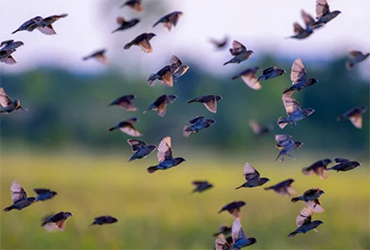
“It’s kind of tough to control flyways, and so things move very quickly with wild birds,” explained Julio Figueroa II, MD, FIDSA, a professor of clinical medicine and the chief of infectious diseases at Louisiana State University School of Medicine, in New Orleans. Wild birds with H5N1 influenza A have been detected in 52 U.S. jurisdictions.
Their migration patterns almost guarantee easy spread of highly pathogenic avian influenza (HPAI) not only among wild birds but also to domestic poultry. Because of this, even culling domestic poultry does little to stop the spread of HPAI among anything more than that particular flock. “It’s not as if as you can cull poultry farms in order to be able to get rid of the virus,” Dr. Figueroa said at the briefing.
But there are “many, many barriers to success here,” admitted Shira Doron, MD, FIDSA, the chief infection control officer at Tufts Medicine health system, an infectious disease physician at Tufts medical Center, as well as a professor of medicine at Tufts University School of Medicine, in Boston.
In addition to migratory habits and poultry infections, the spread of disease to dairy cows has been particularly perplexing, according to Dr. Doron. “It’s somewhat curious that it [H5N1] rips through a herd so quickly, and also that it can travel from farm to farm,” she said during the briefing.
“One of [the barriers] is we still don’t fully understand how the virus got into the dairy herds in the first place, how exactly it is spreading among cows and from farm to farm,” Dr. Doron said. “That mechanism has not been well established, and if you don’t know how it’s spreading, it makes it hard to control that spread.”
Unlike other respiratory infections, high quantities of the H5N1 influenza A strain are not present in the cows’ respiratory tracts. Instead, it is present in the mammary glands and milk of dairy cows, which is one reason why public health officials are warning people against drinking raw milk. Although there have been no reported human H5N1 infections from raw milk, there have been reports of feline infections after drinking raw milk.
But the biggest barrier might be the response itself, both experts admitted. Because the outbreak is occurring among wild animals, domestic animals and some people, various agencies—such as the CDC, FDA, Department of Agriculture, Administration for Strategic Preparedness and Response, and state and local officials—are responsible for the response. Although the coordination is getting better, “it is a very difficult undertaking to coordinate among the various agencies that are responsible for this outbreak response,” Dr. Doron said.
“This is an unprecedented type of outbreak that involves agriculture, wild animals and humans. And so we are in uncharted territory simply in terms of that interagency communication,” she said.
Luckily, veterinarians and medical doctors have found themselves working together more often, under the banner of One Health, an approach that recognizes that the health of people and animals is closely related and develops because of many factors, including interactions among people, animals, plants and the environment.
Public health officials are getting better at having a more coordinated response, Dr. Figueroa agreed.
“It is going to be so important going forward that our human health officials are able to interact with our agricultural officials to interact with farmworkers in such a way as to ensure that they’re properly educated about their risk,” Dr. Doron said.
Worldwide Problem
Because of the migratory patterns of wild birds, the problem is not just a U.S. affair. H5N1 has been detected in at least 23 countries, predominantly in wild birds and poultry with sporadic human cases, according to Dr. Doron.
In 2021, a strain called 2344B emerged and has been seen not only in birds but other mammals. Cases among U.S. dairy cows began to occur last spring. “There have now been 923 affected dairy herds in 16 states, with California leading the pack, representing 706 of those herds,” Dr. Doron said.
Poultry have been affected in 50 states, and 67 human cases have been confirmed since 2022. Three severe cases have occurred in North America:
- A teenager in Canada was admitted to the ICU with the D1.1 strain typically seen in wild birds and mutations indicating adaptation to better binding to human cells.
- An older individual from Missouri was found to have H5N1 through routine surveillance testing, but the CDC is not considering it a severe flu case because he was hospitalized for comorbidities. He had the B3.13 strain seen in cows.
- An older adult from Louisiana recently died. This patient had several comorbidities and was exposed to a backyard flock and wild birds, according to the Louisiana Department of Public Health.
Wild birds can be infected with HPAI and exhibit no signs of illness, so both physicians warned people who handle wild or domestic birds to be careful and take precautions. This includes hunters, as well as people who own backyard flocks.
Luckily, there is still no sign of human-to-human transmission. “Analysis of the strains that are circulating today show them to be poorly suited for transmission between humans, and so poorly suited for pandemic potential,” Dr. Doron said.
“To be more suited for human infection and human-to-human transmission and thus have pandemic potential, a number of mutations would have to occur,” Dr. Doron said. “The virus would have to be better at binding to human airway cells than it is right now.”
The Canadian patient had some mutations in the infecting virus associated with better suitability to mammalian cell binding, but it is unclear whether those mutations existed before the child acquired the virus or developed during the course of the infection (N Engl J Med 2024 Dec. 31. doi:10.1056/NEJMc2415890).
Last week, the Department of Health and Human Services announced a commitment of $306 million toward the H5N1 response. In addition, the CDC and other agencies continue to do surveillance, including testing nasal swab specimens sent from healthcare facilities, monitoring for increased rates of hospitalization from flu-like illness and wastewater surveillance. Millions of vaccine doses, vials and syringes are being stockpiled, and new formulations of vaccine, including ones based on the mRNA platform, are in development. Raw milk testing is occurring in 28 states, representing 65% of the milk supply designed to locate infected cows. And commercial testing is now available through both Lab Corp. and Quest Diagnostics, so physicians can order a test easily if they suspect the person is at risk for H5N1.
“The best way for us as a country to prepare is to ensure robust funding for public health, for pandemic preparedness to build a strong and diverse infectious disease workforce at the ready to respond to the next outbreak,” Dr. Doron said.