





Originally published by our sister publication Infectious Disease Special Edition
By Marie Rosenthal, MS
The FDA approved the chikungunya vaccine, recombinant vaccine for injection (Vimkunya, Bavarian Nordic), the first virus-like particle (VLP) single-dose vaccine in the United States for people 12 years of age and older.
The FDA approved Vimkunya under a Priority Review, based on results from two phase 3 clinical trials that enrolled 3,671 healthy people 12 years of age and older. The adult/adolescent trial (EBSI-CV-317-004) included 3,258 participants, and the older adult trial (EBSI-CV-317-005) included 413 participants.
The studies met their primary end points, with results showing that 21 days after vaccination, the vaccine induced neutralizing antibodies in up to 97.8% of the vaccinated individuals; a rapid immune response started to develop within one week. The vaccine was well tolerated, and vaccine-related adverse events were mainly mild or moderate.
The researchers also checked the antibodies at various other points. “What we found was actually in the group of 12 to 64 year olds, actually by day 8, 47% of those individuals already had protective immunity; 97% by day 15 that went up to 97.8% by day 22,” Peter J. Costa, MPH, MCHES, AVES (Hon), the medical director for North America at Bavarian Nordic, told Infectious Disease Special Edition. “Onset of protection is important for this vaccine, especially for our travelers.”
The vaccine is a VLP vaccine, which means that it uses VLPs designed to mimic the chikungunya virus (CHIKV) but cannot cause disease, Mr. Costa explained.
“It’s a recombinant vaccine that is manufactured to mimic the actual virus itself, but it does not have the proteins in it that would allow it to replicate,” Mr. Costa explained. In other words, it shows the body how to respond if a person comes across the virus, but cannot actually cause chikungunya.
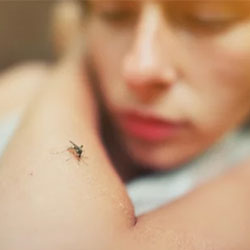
Chikungunya is a mosquito-borne disease caused by CHIKV. In the past 20 years, the virus has emerged across several regions in Asia, Africa and the Americas, including many popular travel destinations, often causing large unpredictable outbreaks. Since its discovery, CHIKV has been identified in more than 110 countries, with evidence of transmission confirmed in more than 50 countries over the past five years. Chikungunya typically presents with acute symptoms, including fever, rash, fatigue, headache, and often severe and incapacitating joint pain.
Most patients recover, but 30% to 40% of those affected may develop chronic symptoms that can last for months or even years. In 2024, 620,000 cases of chikungunya and more than 200 deaths were reported worldwide. Recent data suggest that chikungunya is severely underreported and often misdiagnosed as dengue fever due to a similar symptom profile.
Additional clinical studies are required to confirm the clinical profile of the vaccine, and confirmatory efficacy studies are also planned as part of the post-marketing commitments and requirements as agreed with the FDA.
Vimkunya is supplied as a single-dose 1-mL glass prefilled syringe with a 0.8-mL dose volume. For more information, visit www.bavarian-nordic.com/media/chikungunya.
The primary people in the United States who would consider vaccination against CHIKV are laboratory workers who are working with the virus and travelers to areas where a CHIKV outbreak is occurring, Mr. Costa explained. However, the Advisory Committee on Immunization Practices is expected to make recommendations for the use of this vaccine at its upcoming February meeting.
The FDA approved the first CHIKV vaccine (in Ixchiq, Valneva) in 2023. It is a live-attenuated vaccine indicated for those 18 years of age and older.
Mr. Costa said it was important to remember that in addition to vaccination, travelers should consider primary prevention in the form of approved insect repellents. “People should be cognizant that the two mosquitoes that cause chikungunya are Aedes mosquitoes, primarily Aedes albopictus and Aedes aegypti, and these are day-biting mosquitoes,” he said, so preventive measures such as bed nets would not necessarily be useful in preventing CHIKV.
“These mosquitoes have global range. Their range within the U.S. has been expanding, meaning they can feed and they can reproduce, and temperatures warming doesn’t help. That allows them to expand farther and farther.
“The approval of our chikungunya vaccine is a testament to our unwavering commitment to addressing unmet medical needs and protecting communities worldwide,” said Paul Chaplin, the president and CEO of Bavarian Nordic. “As climate change continues to expand the reach of mosquito-borne illnesses like chikungunya, this milestone underscores the importance of cutting-edge solutions to safeguard travelers and vulnerable populations. We are proud to provide the first vaccine specifically approved for the prevention of chikungunya virus in individuals aged 12 and over, offering a critical tool to combat this emerging and growing health challenge.”
Concurrent with the approval, the FDA awarded Bavarian Nordic a Priority Review Voucher (PRV) under the Tropical Disease PRV program. The vaccine should be available in the first half of this year, the company said.
In May 2023, Bavarian Nordic acquired CHIKV VLP vaccine from Emergent BioSolutions. The company has submitted it for marketing authorization in the United States and European Union. As part of the post-authorization commitments, Bavarian Nordic is planning to conduct a phase 3b efficacy study in endemic countries in Asia to assess vaccine efficacy and safety in an endemic setting during a CHIKV outbreak, according to Mr. Costa. In addition, a phase 4 pediatric study is planned in children 2 to 12 years of age, which will also be partly conducted in an endemic region. Bavarian Nordic is assessing the best strategy to make the vaccine available in endemic countries; some examples are through partnerships or distribution models.
This assessment is ongoing, and active discussions are taking place, he said. “The regulatory pathway in these endemic markets and potential requirements for WHO prequalification is currently under assessment, and at this moment no concrete plan can be communicated,” Mr. Costa said.