





By Gina Shaw
Training competency assessment in pharmacy compounding has typically been fairly straightforward and practical: This is the task; here’s how you do it. Show me that you can do it. But does that serve learners best?
“As we are often short-staffed as well, people without a background in education are asked to do training,” Samantha Tricarico, CPhT, CSPT, a senior pharmacy technician educator at Optum Infusion Services, told attendees at NHIA 2024, in Austin, Texas. “We can use emotional intelligence and cognitive empathy to improve our training programs and implement more successful, compliant sterile compounding education for our staff.”
What does that mean in practice? For starters, Ms. Tricarico said, consider individual learning styles, including:
• visual—pictures, handouts and job aids;
• auditory—videos with sound, lectures and scenario discussions;
• reading/writing—workbooks, Post-its and whiteboards; and
• kinesthetic—shadowing, hands-on and fidgets.
“Most adults are hybrid learners and need multiple of these components to process complex ideas,” she said. “As an educator, you should identify the processes that compounders need to learn at your organization, and build content appropriately. Often you do not need to create these materials from scratch yourself. For example, manufacturers typically have amazing videos that you can make use of.”
Ms. Tricarico listed several processes for which such multimodal training content should be compiled:
• manipulations with vial, syringe and needle, with specific considerations such as dispensing pins and needleless connectors, bulk vials, and reuse of syringes;
• reconstituting powder vial by drawing a diluent from liquid vial via a syringe or needle, including automated fluid transfer options, reconstituting multiple vials and vented needles;
• addition of concentrated drug to diluent, including the addition of pediatric doses less than 1 mL;
• preparation of gravity bags, including air removal for ambulatory patients;
• compounding of syringes and bags, including proper compounding of elastomerics/cassettes;
• complex multi-ingredient compounds such as parenteral nutrition compounding, parenteral nutrition compounders, pooling electrolytes and manual adds; and
• cleaning of primary and secondary engineering controls, including cleaning agents, tools and addressing residue.
Benjamin Bloom’s “Taxonomy of Cognitive Domains” has been applied to education for more than six decades, and is often used to develop educational initiatives that target not only subject matter but also the depth of learning students should achieve. Ms. Tricarico explained that the foundational component of the taxonomy is remembering—didactic training on facts. The next stage in the taxonomy, understanding, is achieved in sterile compounding through shadowing. “Have them stand outside the cleanroom suite and watch how the staff operates, how they are intentional in movement, how they mop floors, how they hold the syringe in vial,” she said.

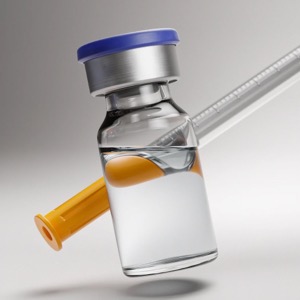

Next up in the taxonomy is applying. “This is the hands-on component of learning,” she said. “Sit at the tabletop and do the demonstration with them. Provide the vial and syringe, have them hold it for horizontal and vertical airflow, have them reconstitute, and so on.”
All personnel who will be doing sterile compounding should achieve at least the next step up in Bloom’s taxonomy: analyzing. “This means extrapolating from what you’ve learned to new situations,” she said. “We can’t train them on every scenario that they are going to encounter when they’re in the cleanroom on their own. If they’re in there compounding independently and they receive a complicated order, we don’t want them to panic. Make sure they are empowered to take the next step.”
The top two components of the taxonomy, evaluating and creating, involve teaching others and developing curricula. Educators should focus on developing a curriculum and learning environment that is safe, comfortable and not punitive. “Avoid biases among your trainers,” Ms. Tricarico said. “You can’t have a pharmacist who thinks less of technicians and views them as administrative assistants. You’re not going to listen to a person you feel does not respect you.”
Empathy is key to successful education, she concluded. “An empathetic educator identifies their students’ feelings, and plans instruction with their perspectives in mind.”
Empathy education also means establishing clear learning intentions and success criteria, and relying on formative assessment to guide instruction, with the following questions: “What I heard was X. … Did I understand that correctly?” “How are you feeling about the training?” “What was the toughest part?” “What do you think you will need to feel more comfortable?”
Ms. Tricarico also stressed examining educational practices to identify areas where educators may be (inadvertently) shaming students. “Shame is the kryptonite of empathy,” she said. “If I make someone feel ashamed about their lack of technique or knowledge, I’ve crushed everything I’ve done to build rapport.”
UW Health Care Direct’s Approach
UW Health Care Direct, in Madison, Wisc., has begun to mold its pharmacy compounding training program to incorporate some of these learning style assessments and empathetic practices, said Cole Seckel, PharmD, the pharmacy operations manager. “We are incorporating several different learning styles, including visual, auditory, reading and writing, and kinesthetic, with at least one method from each at some point during our training process. We usually start with videos, then move toward didactic items and written assessments, and finally move to shadowing/hands-on demonstrations with our learners. It’s definitely still a work in progress, and we have further opportunities to explore different learning styles and the effects that emotional intelligence and empathy have on staff training and team dynamics.”
The sources reported no relevant financial disclosures.