





People who receive parenteral and enteral nutrition face difficulties obtaining essential medicines, as the costs of products and supplies rise and shortages persist. Patients may have trouble finding a provider willing to see them, too. This can mean dealing with inexperienced providers during emergencies, causing dosing errors that can worsen a bad situation.
These are among the findings of a nutrition support patient survey conducted by the American Society for Parenteral and Enteral Nutrition (ASPEN) (Nutr Clin Pract 2024. doi:10.1002/ncp.11187), which organizational leaders discussed in a Malnutrition Awareness Week 2024 webinar. The webinar also featured the perspective of providers, whom ASPEN surveyed as well (Nutr Clin Pract 2024;39:396-408).
“Patients are really in fear of losing their insurance coverage. They’re on a fence and it doesn’t really take much to knock them off that fence,” said Jay Mirtallo, RPh, a professor emeritus at The Ohio State University College of Pharmacy, in Columbus. Mr. Mirtallo, ASPEN’s past president, led its survey efforts.
Almost two-thirds of 350 providers surveyed saw cases of nutrient deficiency that could have been avoided, in the worst cases leading to semi-starvation or starvation. More than 60% of the 170 patients surveyed reported a worsening of symptoms due to lack of ongoing access to needed formulas and difficulty finding qualified clinicians.

Exclusive Video:
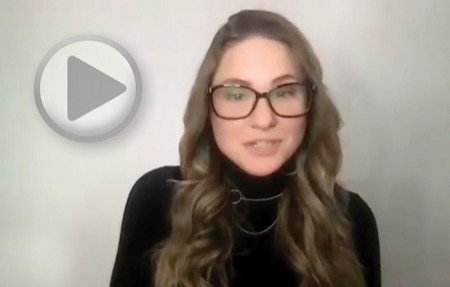
Maisy Cyr, MSW (above) and Linda Lord, NP, offer more nutrition access tips.“This is something that we’ve surveyed over the last 20 years and it’s been consistently reported,” Mr. Mirtallo said, calling it a systems failure.
Although ASPEN has long tracked the views of nutrition providers, Mr. Mirtallo noted that the patient survey is the first of its kind. He said he hopes the patient data prove useful in conversations with federal regulators who may be able to ease access to nutrition or to provide incentives for more providers to specialize in this area.
A Patient’s Perspective
During the webinar, Maisy Cyr, MSW, brought the patient view to the forefront. Ms. Cyr, 31, the manager of education and innovation for a patient advocacy organization, has received PN her entire life for microvillus inclusion disease. This rare condition prevents the digestive tract from absorbing nutrients.
“Supply shortages are having a detrimental impact on this community,” said Ms. Cyr, sometimes due to natural disasters or product shortages but also because IV nutrition spas consume some supply that otherwise might go to people receiving enteral or parenteral support.
Ms. Cyr’s condition is generally well managed but can become acute without warning, requiring access to medications that are in chronically short supply. Ms. Cyr, a white cisgender woman, considers herself privileged in many ways. She noted during her talk that Black and Indigenous people who need parenteral support often find it harder than she does to locate providers who will take their concerns seriously. But she, too, does not fit the mold of what providers expect.
“We live in a society that loves to tell women in particular to lose weight,” noted Ms. Cyr, who has had providers tell her that they’re not sure why she is in their office because she looks fine. Or a provider might tell a woman who is in so much gastrointestinal pain that she cannot eat—and thus needs enteral or parenteral support—that it’s all in her head, Ms. Cyr said. Or a young adult may be denied a feeding tube because the provider thinks they are too young for it. (For an exclusive video on more patient perspectives and access tips, scan the QR code in the box.)
Breaking Down Barriers
Providing nutrition support to people in need it is only part of the challenge. It is also important not to miss other people who could benefit. “Barriers to early nutrition support assessments and interventions start with the lack of using validated malnutrition screening tools” like the Mini Nutritional Assessment (www.mna-elderly.com) or Malnutrition Universal Screening Tool, said webinar speaker Linda Lord, NP, ACNP-BC, CNSC, a nurse practitioner at the University of Rochester Medical Center, in New York. These screens only take a few minutes and serve as an early warning of who needs nutritional help, she added.
Even with that knowledge, how to proceed is not crystal clear. There must be access to clinicians knowledgeable in nutrition support therapies to perform thorough assessments and formulate nutrition support plans, Ms. Lord noted. Clinicians also need to monitor and replace the enteral and parenteral access devices that deliver these therapies, she added.
Additionally, “I believe we need to have more precise formulas based on age and weight to estimate initial fluid needs compared to the standard of 30 mL/kg,” noted Ms. Lord, who said the standard equation does not come from a valid source.
PN compounder Nutrishare ships throughout the United States, Ms. Lord noted, and is an option for people receiving long-term PN without easy access to these formulas and expert nutrition support clinicians locally. Other organizations identified by Ms. Lord also offer support and education, such as the Oley Foundation and the Association of Gastrointestinal Motility Disorders.
“The power of the patient is huge,” Ms. Lord said, in both advocating for themselves and promoting system changes to benefit others.
Ms. Cyr and Mr. Mirtallo reported no relevant financial disclosures. Ms. Lord reported serving on the Medtrition advisory board.


This article is from the January 2025 print issue.