





Originally published by our sister publication Infectious Disease Special Edition
By Anna Tsioulias
Although meningococcal disease incidence in the United States declined dramatically between 1996 and 2021, there was a rebound in 2022 and 2023, according to preliminary data from the CDC.
In fact, 423 cases of meningococcal disease were reported in 2023 alone—the highest number observed since 2014, and 251 cases have already been reported in 2024 as of June 11. In many jurisdictions, the increases are primarily due to serogroup Y sequence type (ST)-1466, a strain susceptible to all treatment and prophylaxis antibiotics. In addition to observing a predominance of cases—64%—among Black people, a disproportionate number of people with HIV were infected in 2023, according to Amy Rubis, MPH, an epidemiologist at the National Center for Immunization and Respiratory Diseases, CDC, told the Advisory Committee for Immunization Practices (ACIP) meeting in June.
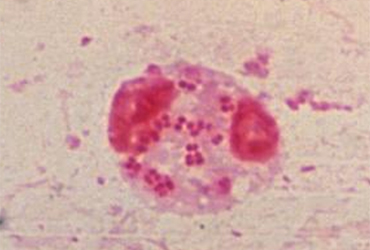
“We’re also seeing an unusual age distribution among cases caused by this strain, with almost no cases in children or adolescents,” Ms. Rubis said. Just over 35% of ST-1466 serogroup Y cases occurred in people ages 24 to 44 years, and almost 40% of cases were 45 to 64 years of age in 2022 to 2023. “We don't know if that's just the epidemiology of this strain or if the adolescent vaccination program is successfully protecting the 11- to 20-something age group.”
During the past two years, significant increases have been seen in penicillin resistance and penicillin and ciprofloxacin dual-resistant cases, which are mostly serogroup Y, mainly sequence type ST-3587. This strain is disproportionately affecting Latino people, with 74% of dual-resistant cases and 53% of penicillin-resistant only cases reported among Hispanic populations for the past six years.
As for ciprofloxacin-resistant cases, the CDC reported an increasing number of resistant isolates that do not belong to serogroup Y, according to Ms. Rubis. “Ciprofloxacin resistance is increasing, and multiple jurisdictions have moved away from using ciprofloxacin for prophylaxis.”
Furthermore, the ACIP reviewed data on a new MenABCWY vaccine currently under development by GSK, which combines the MenB-4C and MenACWY vaccines. The safety profile of this vaccine was favorable and similar to that of MenB-4C. However, more adverse events occurred for the pentavalent vaccine than MenACWY, consistent with the greater reactogenicity of MenB-containing vaccines compared with those containing only MenACWY.
The CDC reported that the immunogenicity of the pentavalent vaccine was noninferior to that of MenACWY. Additionally, the prespecified success criteria for comparison of pentavalent and MenB-4C 0, 2 months was met for three of four strains (fHbp, NHBA and NadA) and in comparison with MenB-4C 0, 6 months was met for two of four strains (fHbp and NadA). However, 24 months following pentavalent vaccination, titers waned substantially for serogroup A and three B strains: fHbp, NHBA and PorA.
“The workgroup also noted that the PorA indicator strain is important because PorA represents the full outer-membrane vesicle component of the vaccine, and response to this indicator strain has bearing on cross-protection,” explained Sarah F. Schillie, MD, MPH, MBA, an epidemiologist also in CDC’s National Center for Immunization and Respiratory Diseases.
Of note, no data were available on the immunogenicity of this new vaccine in immunocompromised people.
“I really worry about the complete lack of knowledge of immunocompromised response to vaccine, vaccine efficacy, etc.,” said Camille N. Kotton, MD, FIDSA, FAST, the clinical director of infectious diseases at Massachusetts General Hospital, in Boston, and an ACIP member. “I would encourage many researchers to do more research so that we could make good guidance. I worry that we're leaving a significant at-risk population perhaps less well protected.”
Under consideration was the schedule option for meningococcal vaccinations. However, the committee was not scheduled to make any recommendations at the June meeting and is still gathering information. Currently, the recommendation is for the first dose of MenACWY to be administered at age 11 or 12 years and the second dose at 16 years, as well as both doses of MenB-4C between ages 16 and 23 years, based on shared clinical decision making. Because there has been significant pushback in previous years against shared clinical decision making, the workgroup is considering the incorporation of either routine vaccination or risk-based vaccination for MenB (MMWR Morb Mortal Wkly Rep 2024;73[15]345-350).