
Originally published by our sister publication Infectious Disease Special Edition
Medical and public health leaders expressed alarm after federal health officials announced sweeping changes to the U.S. childhood immunization schedule, an unprecedented move experts warn could accelerate the spread of vaccine-preventable diseases and dismantle decades of evidence-based vaccine policy.
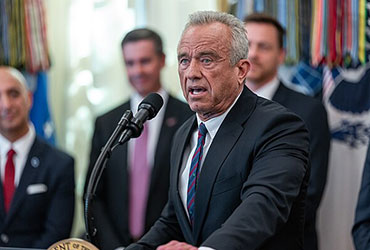
The Jan. 5 announcement by the CDC and the Department of Health and Human Services to revise long-standing childhood vaccine recommendations was finalized without public comment, marking a sharp departure from the transparent, science-driven process that has historically governed U.S. immunization guidance.
“I really didn’t think this was coming,” said Paul Offit, MD, the director of the Vaccine Education Center at Children’s Hospital of Philadelphia. “I didn’t think that a group of federal appointees, behind closed doors, would make a decision without any input from even this makeshift ACIP [Advisory Committee on Immunization Practices], and certainly without public comment.”
Under the revised schedule, federal health officials removed several vaccines from routine, universal childhood recommendations and reclassified others under “shared clinical decision making” or narrower high-risk categories, effectively signaling that these vaccines are no longer considered standard preventive care for all children.
The changes affect vaccines for COVID-19, influenza, meningococcal disease, respiratory syncytial virus (RSV), and rotavirus, among others. While the vaccines remain licensed and available, infectious disease experts said the shift in recommendation status fundamentally alters how clinicians counsel families and how parents perceive risk.
By moving vaccines into shared clinical decision-making, Dr. Offit said, the implicit message becomes that declining vaccination is “perfectly reasonable,” a framing he warned undermines the purpose of national recommendations. “That’s not why you have a recommendation,” he said. “You have a recommendation to help guide parents and help guide physicians as to why some of these vaccines are important to receive.”
Unlike prior updates to the childhood schedule, the revisions were not preceded by public deliberation or a formal ACIP vote. Instead, they were announced directly by HHS and the CDC, bypassing the mechanism that has guided U.S. vaccine policy for decades.
Vaccines Moved Out of Universal Recommendations
Dr. Offit challenged the scientific logic of narrowing recommendations for infections that are nearly unavoidable in childhood.
“It doesn’t matter what country you grow up in, and it doesn’t matter how good the healthcare system is,” he said. “Everybody’s going to be infected by one of those three viruses—flu, COVID, rotavirus—by the time they’re 5 or 6 years old. Your first infection might be a severe infection. So of course it is reasonable to get those vaccines.”
He also rejected the premise that focusing only on high-risk groups is sufficient. “There’s not a no-risk group,” he said. “Everyone’s at risk. So, therefore, everyone benefits.”
The rollback of RSV recommendations drew particular concern given recent progress in preventing severe disease in infants. Before the availability of maternal RSV vaccination and long-acting monoclonal antibody prophylaxis for newborns, RSV caused an estimated 60,000 to 80,000 pediatric hospitalizations and 100 to 300 deaths annually in the United States. “In the past year, when we’ve had roughly 45% to 50% uptake for the maternal vaccine and the monoclonal antibody, we’ve reduced hospitalization in children under 7 months by a little more than 50%,” Dr. Offit said. “That’s a tremendous achievement.”
Medical Societies Condemn Move as ‘Reckless,’ ‘Dangerous’
The Infectious Diseases Society of America (IDSA) issued a strong rebuke of the administration’s action, warning that weakening universal vaccine recommendations threatens herd immunity and increases the likelihood of outbreaks, particularly among vulnerable populations.
“Today’s announcement that HHS is drastically altering the U.S. childhood vaccine schedule without a transparent process or clear scientific justification represents the latest reckless step in Secretary Kennedy’s assault on the national vaccine infrastructure that has saved millions of lives,” said Ronald G. Nahass, MD, MHCM, the IDSA president, in a statement. “His actions put families and communities at risk and will make America sicker.”
IDSA warned that upending long-standing recommendations without transparent public review or engagement with external experts will undermine confidence in vaccines, with the likely outcome of decreasing vaccination rates and increasing disease. Making such changes amid ongoing outbreaks of vaccine-preventable diseases, the group added, shows “a disregard for the real confusion families already face.”
Federal officials have repeatedly cited childhood immunization schedules in other high-income countries, particularly Denmark, which recommend fewer vaccines in early childhood than the United States. But infectious disease experts noted that comparison ignores critical differences in disease epidemiology, health systems, and social infrastructure.
“Disease prevalence differs country to country, and there has been demonstrated and ongoing need in the U.S. for the vaccines included in the childhood vaccine schedule,” Dr. Nahass said. “Most other high-income countries have universal health care and parental leave, both of which can support prevention and early care and contribute to lower disease prevalence.”
Robert H. Hopkins Jr., MD, the medical director of the National Foundation for Infectious Diseases (NFID), agreed. “Comparing the U.S. childhood immunization schedule to that of Denmark or other countries ignores fundamental differences in population size, diversity, healthcare access, and infectious disease risk. These differences matter,” he said in a statement. “U.S. immunization policies must be guided by a transparent, evidence-based process and grounded in U.S. epidemiology and real-world risk. Adopting an immunization schedule designed for another country could put U.S. children at risk for serious, preventable diseases.”
The American Medical Association said it was “deeply concerned” by the changes, warning that they undermine public trust and put children at unnecessary risk. “Vaccination policy has long been guided by a rigorous, transparent scientific process grounded in decades of evidence showing that vaccines are safe, effective, and lifesaving,” said Sandra Adamson Fryhofer, MD, an AMA trustee, in a statement. “Changes of this magnitude require careful review, expert and public input, and clear scientific justification. That level of rigor and transparency was not part of this decision.”
And the American Academy of Pediatrics (AAP) called the move “dangerous and unnecessary.”
“For decades, leading health experts, immunologists, and pediatricians have carefully reviewed new data and evidence as part of the immunization recommendation process, helping to keep newborns, infants, and children protected from diseases they could be exposed to in the United States as they develop and grow,” said Andrew D. Racine, MD, PhD, the AAP president, in a statement. “Today’s decision, which was based on a brief review of other countries’ practices, upends this deliberate scientific process. The United States is not Denmark, and there is no reason to impose the Danish immunization schedule on America’s families. America is a unique country, and Denmark’s population, public health infrastructure, and disease-risk differ greatly from our own. At a time when parents, pediatricians and the public are looking for clear guidance and accurate information, this ill-considered decision will sow further chaos and confusion and erode confidence in immunizations. This is no way to make our country healthier.”
A Breakdown in National Vaccine Authority
Beyond the specific vaccines affected, experts said the announcement represents a more significant breakdown: Clinicians and families can no longer rely on federal health agencies as the nation’s authoritative source for scientifically grounded childhood vaccine recommendations.
“When the world made sense, we could look to the CDC, the nation’s No. 1 public health agency,” Dr. Offit said. “We can’t anymore.”
As a result, pediatricians and infectious disease specialists are increasingly turning to the leadership of other medical authorities, including the AAP, regional and state public health coalitions, and independent initiatives such as the Vaccine Integrity Project. The AAP reiterated that it would continue to publish its own childhood vaccine recommendations and urged parents to trust their children’s pediatrician. And Dr. Hopkins stressed that NFID “strongly recommends annual flu vaccination for everyone age 6 months and older, and RSV vaccination for all infants whose mothers did not receive an RSV vaccine during pregnancy.”
“Although these are important efforts, the problem is that they are fragmented,” Dr. Offit said. “It would be helpful if there was one organization that everybody looked to, but it just isn’t working out that way.”
He also warned that more anti-vaccine moves were likely to come. “The goal of this administration is to make vaccines basically optional—to make people believe they’re really not that important,” he said. “With that attitude, we already have the biggest measles outbreak we’ve seen in more than 30 years. We have more flu deaths in children this past year than we’ve had since 2009. We’ve had pertussis deaths in states that haven’t seen whooping cough deaths in years. This kind of action will only make that worse. Children will continue to suffer.”
Dr. Offit reported no relevant financial disclosures. He is the co-creator of a vaccine for the prevention of rotavirus.