

As disruptions stemming from extreme weather and natural disasters intensify with climate change, health systems and pharmacists must prepare plans to ensure that they can continue to deliver high-quality care, experts said.
Climate readiness has been a topic of discussion at several major pharmacy meetings, including the 2024 and 2025 ASHP Midyear Clinical Meeting & Exhibition, and the NASP 2024 Annual Meeting & Expo. Recent papers have also explored U.S. supply chain vulnerabilities and the pharmacy profession’s role in responding to the crisis (JAMA 2025 Aug 20. doi:10.1001/jama.2025.13843; Am J Health Syst Pharm 2022;79[16]:1393-1396). Several themes that emerged are the importance of diversifying the medical supply chain, addressing vulnerabilities faced by a particular drug manufacturing plant or hospital location, and recognizing the ways in which hazards such as extreme heat can aggravate certain disease states.
Ryan Beechinor, PharmD, BCPS, BCOP, who co-authored the American Journal of Health-System Pharmacy paper, stressed that immediate action is needed on these measures, given the growing threat climate extremes pose to the nation’s healthcare infrastructure.
“Climate change is not some far-off nebulous threat, or some monolith; it’s a complex issue with multiple causes and impacts, and a present disruptor,” said Dr. Beechinor, a clinical specialist in hematology and oncology at the UC Davis Comprehensive Cancer Center and an assistant professor at the UC Davis School of Medicine, in Sacramento, California, and the University of California San Francisco School of Pharmacy. “Pharmacists can either react to those disruptions or get ahead of them by integrating climate consciousness into every tier of practice.”
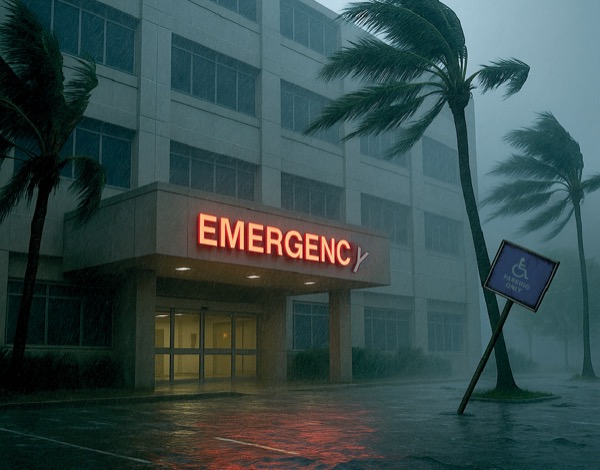
During a session at the 2024 ASHP meeting, in New Orleans, Ronald Blanton, MD, and Vincent T. Idemyor, PharmD, discussed how climate-related effects can harm public health. They also reviewed policies that healthcare facilities can implement to prepare for and endure crises such as hurricanes and wildfires.
“When it comes down to climate [effects on] health, it’s here, and we just need to find a way to start dealing with it, because there’s no way we’re going to run away from this,” said Dr. Idemyor, a professor and distinguished visiting scholar from the Faculty of Pharmaceutical Sciences at the University of Port Harcourt, in Nigeria. “We as pharmacists definitely will have to get involved. … [Climate change] is going to [affect] us because drugs are involved, healthcare is involved.”
Climate Health Risks
Climate change may inflict damage on public health through several routes: increased temperature, precipitation extremes, and sea level rise, said Dr. Blanton, the chair of the Department of Tropical Medicine and Infectious Disease at the Tulane Celia Scott Weatherhead School of Public Health and Tropical Medicine, in New Orleans. These forces can lead to excessive heat, poor air quality, reduced food and water quality, and changes in distribution of infectious agents—which in turn could lead to rises in heat-related illness; cardiopulmonary illness; food-, water-, and vector-borne disease; and profound stress and mental health consequences. Dr. Blanton does not consider these effects to be a distant concern. “We’re not talking about the future; we’re talking about the present,” he said.
The health consequences of climate change will not be distributed equally throughout the U.S. population, Dr. Blanton continued. He listed several particularly vulnerable groups, including:
- adults older than 65 years of age;
- very young children;
- pregnant people;
- low-income and minority groups;
- outdoor workers; and
- people with chronic conditions, disabilities, and comorbidities.
Citing data from the Environmental Protection Agency’s 2021 report, “Climate Change and Social Vulnerability in the United States,” Dr. Blanton noted that neighborhoods with high poverty rates are exposed to more air pollution and heat island effects, and experience greater temperature-related mortality impacts. Furthermore, he said, low-income and minority individuals are more likely to move into high-risk flood zones.
Older adults, meanwhile, are especially vulnerable during hot weather. Age-related thermoregulatory, cardiovascular, and fluid regulation changes increase the likelihood of heat stroke, acute myocardial infarction, thrombosis and embolism, ischemic stroke, electrolyte imbalances, and acute kidney injury. These vulnerabilities led to spikes in mortality rates among older adults when heat waves struck Europe in the summer of 2022 (Environ Health Perspect 2024;132[9]:92001). “Mortality very much follows the heat,” Dr. Blanton observed.
For children younger than 5 years of age, air pollution and wildfire smoke are a particular concern. “They have a higher respiratory rate and end up absorbing more of the air pollution,” Dr. Blanton said. Outdoor play and sports can also expose children to high temperatures, while flooding can bring children (as well as adults) into contact with sewage and other hazardous material in contaminated water, and the trauma of living through natural disasters “in the absence of supportive caregivers can contribute to toxic stress,” according to the American Academy of Pediatrics. “This toxic stress may lead to a range of negative psychosocial and physical health effects that can extend into adulthood,” the organization wrote in a policy statement (Pediatrics 2024;153[3]:e2023065504).
Such disasters will have another significant consequence: “Population displacement and movement may be the biggest climate impact that will in turn effect the presentation of disease-like infections as well as the provision of healthcare resources,” Dr. Blanton told Pharmacy Practice News. “Post-Hurricane Helene, post-Maui and LA fires, people talked a lot about going someplace safer. There will be a lot more of this talk.”
Dr. Beechinor also underscored the disproportionate impact of climate change on marginalized communities. “Pharmacists sit at the crossroads of healthcare and community; our profession is one of the most trusted, meaning we have a platform to advocate for policies that address both environmental and social determinants of health,” he said. “A justice-based response means recognizing that sustainability and equity are inseparable goals, not parallel ones.”
Rising to Meet Climate Challenges
The time for pharmacists to become involved in developing climate-informed clinical practice guidelines is now, Dr. Idemyor said. He described several areas to focus on:
- developing protocols for managing climate-sensitive health conditions;
- updating treatment guidelines to account for changing disease patterns;
- implementing early warning systems for climate-related health risks; and
- integrating climate considerations into patient education and preventive care.
“Pharmacists must be included in this because we have to now implement policies for climate-controlled medication storage and develop strategies for managing drug shortages due to climate events,” Dr. Idemyor said.
Medication Management
As medication experts, Dr. Idemyor said, pharmacists must be involved in developing care guidelines that address medications that increase a person’s sensitivity to heat. Drug-induced heat-related illness can be a result of increasing urine output, preventing—or causing excessive—sweating, slowing heart rate (thus limiting blood circulation for cooling), or otherwise impairing the body’s ability to regulate temperature. These drugs include certain antidepressants, anticholinergics, antipsychotics, antibiotics, opioids, beta-blockers, stimulants, and diuretics (Clin Psychopharmacol Neurosci 2021;19[1]:1-11; bit.ly/4mPwgDq).
Infrastructure Upgrades
To ensure that clinicians can continue to provide care during climate-related disruptions, health systems should invest in secure, reliable telehealth platforms and create guidelines for telepharmacy use during these events; considerations include licensure and reimbursement rates for remote care. “We still have to find a way to get to these people who need care,” Dr. Idemyor stressed.
Health systems must also upgrade their infrastructure to withstand extreme weather and shore up their emergency preparedness and response plans, Dr. Idemyor said. (See disaster preparation sidebar.) Protocols should focus on specific extreme weather events such as heatwaves, floods, and wildfires; develop backup systems for critical services, and evacuation and relocation plans for patients and staff; and train staff with regular drills for climate-related emergencies and education about how climate change can affect healthcare delivery.
Mules and Helicopters Come to the Rescue
The United States has been battered by numerous disasters over the last five years, from the COVID-19 pandemic to hurricanes, ice storms, tornado outbreaks, and wildfires, highlighting the importance of planning ahead so patient care is disrupted as little as possible, according to a session at the NASP 2024 Annual Meeting & Expo, in Nashville, Tennessee. (At the time of the meeting, Hurricane Milton was bearing down on Florida.)
It’s important not to overlook backup planning and the significance of adaptability in responding to crises, the speakers said. After Hurricane Helene barreled through the Southeast in September 2024 and roads across western North Carolina became impassible, emergency supplies—including specialty medications—were transported by mule train. “That was a contingency plan to a contingency plan when all else failed,” said Brenda Gray, PharmD, a senior clinical consultant at Clinical Pharmacy Partners, in Tampa, Florida, a consultancy focused on specialty pharmacy.
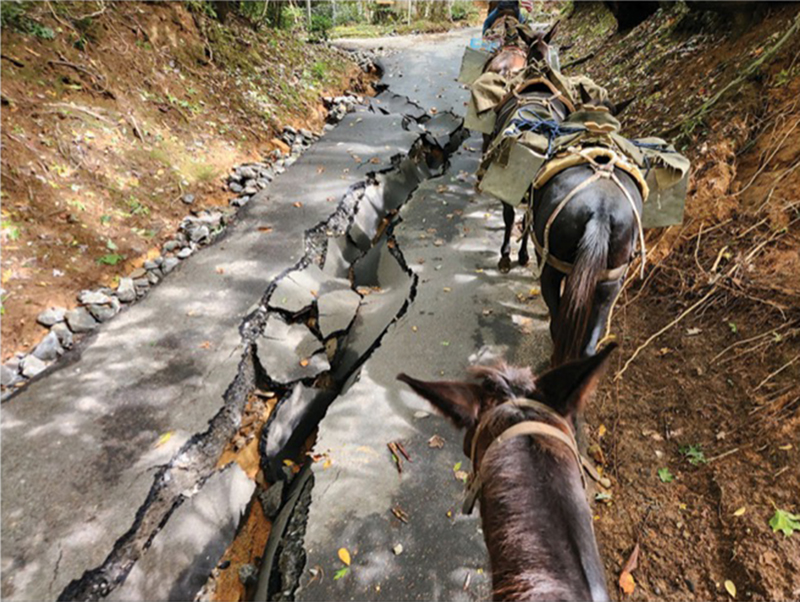

On another occasion, Dr. Gray had to pause a virtual survey for a site in Alabama when the pharmacy staff needed to go meet a helicopter. “Their pharmacy at their hospital was so short on drugs, and the roads had been iced in. … They actually sent a state trooper helicopter to their wholesaler to get the drugs for the hospital as well as the specialty pharmacy, and they all had to go upstairs and unload it,” she recalled.
Helicopters and mule trains represent the “creative extremes” of disaster management, Dr. Gray said. But every pharmacy can benefit from looking back at the disasters that have affected their organization in recent years. Following a drill or genuine emergency, institutions should conduct an after-action report that evaluates how the facility responded. Key questions for staff include:
- What worked and what didn’t?
- What resources do you need that you didn’t have?
- What was the thing that you remember being the biggest challenge? And is there something we can do to make it work better?
- What do you know now that you wish you knew before the event?
“It’s not enough to just identify that something didn’t work well,” Dr. Gray said. “[Address] lessons learned, tools needed, training needed, and then you want to redo the drill.”
One aspect of ensuring that your pharmacy’s emergency plans are flexible is varying the timing and type of event simulated in these drills. “If your most common thing is hurricanes, do [a drill focused on] civil unrest one year; if your most common thing is winter storms, do a tornado one time,” Dr. Gray advised. (For more tips from Dr. Gray and other experts, see Pharmacy Practice News November 2022).
—K.B.
Fortifying Supply Chains
When flooding from Hurricane Helene in 2024 damaged a Baxter facility in North Carolina, it triggered a major IV fluid shortage. It’s crucial to anticipate such events and build a resilient supply chain, Dr. Idemyor said. “We don’t need to wait until … it happens, and then we start scrambling around.”
He described several buttresses of supply chain resilience:
Inventory management can include building stockpiles of essential medical supplies and medications, implementing “just-in-time” inventory systems with climate considerations, and diversifying suppliers to reduce the risks from regional climate impacts. Relying on local suppliers also cuts down on transportation-related emissions.
Procurement policies can involve supporting suppliers with strong environmental and climate credentials, developing contingency plans for climate-related supply chain disruptions, and implementing a product life-cycle assessment approach to encourage sustainable procurement decisions.
Boosting Sustainability
Climate readiness also encompasses waste management and reduction, Dr. Idemyor continued. (For more about how pharmacists can contribute to sustainability, see sidebar on page 55.) Facilities can enact policies that:
- implement comprehensive recycling programs;
- adopt reusable medical equipment when possible;
- compost organic waste from cafeterias; and
- properly segregate and dispose of climate-sensitive waste.
‘Attainable First Steps’ to Boost Sustainability at Your Institution
Climate readiness isn’t just about preparing healthcare facilities for the depredations of natural disasters. Pharmacists can advocate for more sustainable practices at their institutions. These are often small, affordable changes, said Ryan Beechinor, PharmD, BCPS, BCOP, a clinical specialist in hematology and oncology at the UC Davis Comprehensive Cancer Center and an assistant professor at the UC Davis School of Medicine, in Sacramento, California, and University of California San Francisco School of Pharmacy.
“Pharmacists don’t need sweeping policy reform to make meaningful change. We can start with targeted/low-cost interventions that scale quickly,” said Dr. Beechinor, who co-authored a paper about pharmacy’s role in responding to climate change (Am J Health Syst Pharm 2022;79[16]:1393-1396). “Reusable sharps containers, greener inhaler selections, and dose-rounding policies are not moonshots [and] are already established as some centers.”

Such practices are “attainable first steps with measurable environmental impact,” he said. “Our profession is extraordinarily good at precision; it’s time we apply that same precision to sustainability.”
Dr. Beechinor and his colleagues presented recommendations for individual pharmacists and pharmacy organizations, several of which included:
- advocating for facilities to implement workplace recycling programs and use of clean, renewable energy;
- holding meetings virtually when possible to decrease the carbon footprint from air travel;
- adding climate change education in pharmacy training and professional meetings; and
- implementing climate change stewardship programs in health systems and professional organizations to evaluate sustainability strategies.
When it comes to enacting these policies, Dr. Beechinor said, “our institution, like many, is still finding its footing.” While the UC Davis undergraduate campus, in Davis, is widely recognized as a thought leader in sustainable practices, he noted, such policies are less well established at the medical campus in Sacramento. “We have seen progress like waste segregation initiatives and/or virtual work, but it’s fragmented. What’s missing is a unifying framework that treats sustainability as part of quality improvement, not an extracurricular activity,” Dr. Beechinor said. “The encouraging part is that pharmacy has the data mindset and operational reach to lead that shift once institutions decide to prioritize it.”
A Team Effort
All these strategies should be enacted, not just in hospitals and other healthcare facilities but also in curricula for pharmacy students. “They need to start developing the mindset that [climate change] is here and that we are going to have to work together [to respond],” Dr. Idemyor said.
Proactive planning in the face of climate impacts will put institutions in a stronger position to adapt through identifying vulnerabilities in the healthcare system, sharing lessons learned, and coordinating regional climate preparedness efforts. “We have to share best practices, … not just here in the United States but across the globe,” Dr. Idemyor advised. “The centers or places where things where they’ve done well, we have to now reach out and see how it was done effectively.”
Pharmacists also have a role to play in mitigating the destructive effects of climate change by monitoring emerging climate health impacts and by advocating for policies that reduce their facilities’ carbon footprint, Dr. Idemyor said. Finally, he said, pharmacists can use shared decision-making to educate and involve patients in climate-related health discussions and empower them to make climate-friendly health choices.
Dr. Beechinor pointed out that patients see pharmacists in primary care settings more frequently than physicians (Can Pharm J [Ott] 2018;151[1]:4-5). “That creates an opportunity/responsibility to advocate for a response to climate change,” he said. “Even signs that advertise climate change conscious practices can go a long way into making this subject more ingrained into the public’s consciousness.”
Drs. Blanton and Idemyor acknowledged the potential difficulty of persuading institutional leadership to adopt climate-informed policies. “You have to take baby steps to address this,” Dr. Idemyor said. “No administrator who’s looking at the bottom line wants to start looking at costs in the future.”
Dr. Blanton emphasized the importance of highlighting near-term benefits and cost savings. “Let me not discourage you from trying; I think it’s still worth bringing it to people’s attention,” he said. “But the closer, the shorter term that one can make the argument, the more likely it is to have an impact.”
In the months since the ASHP conference, one challenge that Dr. Blanton has pondered is how pharmacists can engage with people who do not believe in climate change. The most important step, he told PPN, is to find common ground that both parties can agree on.
For example, a pharmacist could explain how the scientific and medical communities build consensus for an idea (e.g., that the climate is changing and human activity is contributing). “Science is not always right. True. The design of the whole process is to propose something that may be true, sometimes based on data, sometimes not, and then everyone takes aim to shoot it down,” he said. “Scientists and doctors are actually a contentious lot and are happy to find the error in anybody’s argument. … If you get enough of them going in the same direction, you need to start to credit what they say.”
Dr. Idemyor will discuss climate health challenges again at the 2025 ASHP Midyear Clinical Meeting & Exhibition, in Las Vegas. Pharmacy practice faces several “critical vulnerabilities,” he told PPN, “including the fact that from 2019 to 2024 more than 62% of U.S. drug production sites were located within climate disaster zones and how events like Hurricane Helene’s impact on intravenous fluid supplies demonstrate systemic fragility.” (For more about this research, see sidebar.)
Responding to climate change will require collaboration among government agencies, academia, and industry. “No single sector can secure healthcare infrastructure or pharmaceutical supply chains against climate disruption in isolation,” he said. Dr. Idemyor envisions a coordinated approach that includes actions such as relocating high-risk manufacturing sites, modeling climate risks, and maintaining stockpiles of supplies.
“Resilience cannot be purchased through incremental adjustments,” he said. “We require fundamental transformation: climate-informed supply chains, decarbonized operations, and healthcare systems designed for the realities of 2050, not 1950.”
The sources reported no relevant financial disclosures.