
Tube occlusions from medications are common, but there are several strategies to avoid them, pharmacy experts said during the ASPEN 2025 Nutrition Science & Practice Conference, in Columbus, Ohio.
Typically, the occlusions occur due to a lack of rinsing, noted Mark Klang, RPh, BCNSP, PhD, FASPEN, the program manager for the Research Pharmacy Core Laboratory at Memorial Sloan Kettering Cancer Center, in New York City. The tube should be rinsed with purified water, he said. Additionally, drugs have to be crushed thoroughly to be absorbed, “because giving the drug through the feeding tube bypasses the normal course of the way the drug is being administered,” Dr. Klang noted. One device he has been using is RxCrush, a pill crusher that dissolves medications for use in feeding tubes.
Another common issue is coagulation of intact proteins. “Proteins will congeal with the acid in the stomach,” he said. For slow clogs, Dr. Klang noted, avoid using sodas or juices; instead, flush the tube with water to maintain flow.
Be aware that some drugs such as everolimus “form nasty gels” when mixed with water. “Dilute them a lot,” he stressed. Also, many newer chemotherapy drugs are highly lipophilic and have excipients added to enhance that solubility; however, those excipients may lead to clogs. When mixing a drug in a syringe, open the capsule because an intact capsule in a syringe will not dissolve. “It will just sit there; it will not dissolve for a long time in water.”
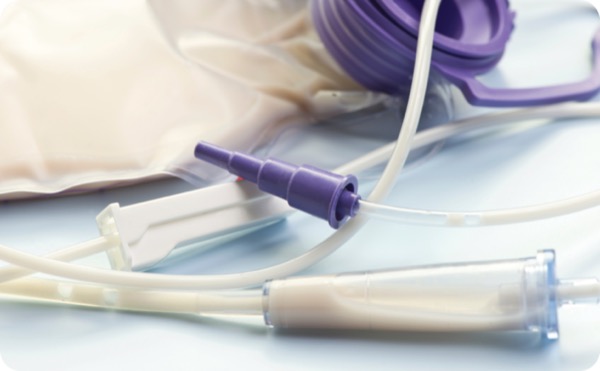
Dr. Klang also offered these additional tips to handle formulation issues:
- Beads in capsules. Drug beads in capsules have enteric coatings and are resistant to acids, so when mixed with water, they will clump. Some orally disintegrating beads can be mixed with water and administered through the tube. For enteric-coated beads, mix them with apple or other juice to keep them in an acidic environment so they will not clump going through the feeding tube, Dr. Klang said.
- Beads with sugar cores. The beads in some drugs, such as aprepitant and itraconazole, have a sugar core, with the drug sprayed onto the surface of sugar granules. “If you mix it and you put it on the shelf to do later, the drug [precipitates] out,” Dr. Klang said. “You get no drug into the patient.” To avoid this, let the beads get to the consistency of a slurry and then put through the feeding tube, he suggested.
- Syrups and elixirs. Syrups and elixirs are acidic and will form clogs with nutrition supplements. Check whether a crushed drug is available.
An article by Dr. Klang (J Parenter Enteral Nutr 2023;47[4]:519-540) covers appropriateness and instructions for feeding tube administration of 323 oral medications. A podcast related to the article is available at bit.ly/3YgemQI.
Dr. Klang reported no relevant financial disclosures.