
Meitheal Pharmaceuticals Inc., a fully integrated biopharmaceutical company based in Chicago and focused on the development and commercialization of generic injectable, fertility, biologic and biosimilar products, announced the availability of Alprostadil Injection USP 500 mcg/mL single-dose vials to the U.S. market where only an ampule form is offered.
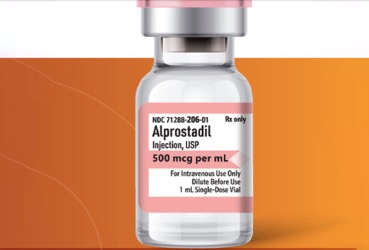
“Meitheal is proud to expand its portfolio of sustainably manufactured and affordably priced generic injectables with the introduction of Alprostadil Injection, USP in vial form,” said Brett Novak, the senior vice president of commercial operations at Meitheal. “Amid ongoing product shortages, we are committed to accelerating the availability of critical medicines and launching the sole vial presentation for the 500 mcg/mL strength, which may offer healthcare providers a safer alternative for handling and administration to patients.”
Alprostadil Injection, USP is a vasodilator used for palliative therapy to temporarily maintain the patency of the ductus arteriosus until surgery can be performed in neonates who have congenital heart defects and depend on the patent ductus for survival. Alternatively, to the glass ampule, Meitheal’s unique offering of the vial form has the potential to offer safer usage and administration of medication. Glass ampules are widely used to contain injection medications because of their nonreactive properties.1 However, the contamination of medication contents by glass particles is a common phenomenon following the manual opening of glass ampules.1,2 Such contaminated medication, if used, could lead to glass particle circulation in a patient’s blood, which can further lead to complications such as pulmonary emboli, infusion phlebitis, granuloma formation or nodular liver fibrosis.3 Similarly, the sharp and jagged edges from opening ampules have been documented to cause hand lacerations among healthcare workers, which pose potential risks to tendons and nerves.1,4
Meitheal is planning for the launch of multiple new products throughout 2025 across its core therapeutic areas of anti-infectives, anesthetics, critical care, fertility and oncology by continuously evaluating new product opportunities and prioritizing those that address gaps in the current marketplace.
About Alprostadil Injection, USP
Alprostadil Injection, USP is indicated for palliative, not definitive, therapy to temporarily maintain the patency of the ductus arteriosus until corrective or palliative surgery can be performed in neonates who have congenital heart defects and who depend on the patent ductus for survival. Such congenital heart defects include pulmonary atresia, pulmonary stenosis, tricuspid atresia, tetralogy of Fallot, interruption of the aortic arch, coarctation of the aorta or transportation of the great vessels with or without other defects.
In infants with restricted pulmonary blood flow, the increase in blood oxygenation is inversely proportional to pretreatment p92 values; that is, patients with low pO2 values respond best, and those with pO2 values of 40 torr or more usually have little response.
Alprostadil Injection, USP should be administered only by trained personnel in facilities that provide pediatric intensive care.
For the full prescribing and safety information, please click on the following link: Learn more about Alprostadil Injection, USP.
References
1. Stoker R. Preventing injuries from glass ampoule shards. Managing Infection Control. October 2009:45-47. Accessed March 20, 2025. https://sofia.medicalistes.fr/spip/IMG/pdf/Preventing_injuries_from_glass_ampoule_shards.pdf
2. Zabir A, Choy C, Rushdan R. Glass particle contamination of parenteral preparations of intravenous drugs in anesthetic practice. Southern African Journal of Anesthesia Analgesia. 2008;14(3):17-19.
3. Chiannilkulchai N, Kejkornkaew S. Safety concerns with glass particle contamination: improving the standard guidelines for preparing medication injections. Int J Qual Health Care. 2021;33(2):mzab091.
4. Parker MRJ. The use of protective gloves, the incidence of ampoule injury and the prevalence of hand laceration amongst anesthetic personnel. Anesthesia. 1995;50(8):726-729.