
Originally published by our sister publication Infectious Disease Special Edition
By Marie Rosenthal, MS
With no explanation, the FDA canceled the meeting of its Vaccines and Related Biological Products Advisory Committee (VRBPAC), scheduled to discuss the makeup of the 2025-2026 seasonal influenza vaccines, which could affect next year’s supply of influenza vaccine.
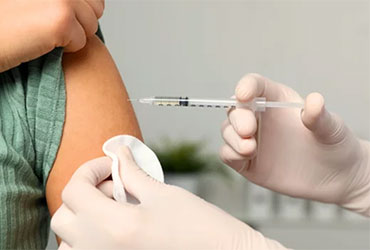
“I got an email from the FDA saying that our March 13 meeting has been canceled—not postponed, not delayed—canceled, with no reason given as to why, who made that decision or how it came to be made,” said Paul A. Offit, MD, a professor of pediatrics in the Division of Infectious Diseases at The Children’s Hospital of Philadelphia, who sits on the advisory panel.
Dr. Offit noted a follow-up statement to the panel that said the FDA alone would decide the strains that would be included in next season’s vaccine, and the agency would give that information to the manufacturers. “But I guess that's going to happen without the advice of an expert advisory committee—an expert independent of government, independent of pharmaceutical companies, independent advisory committee,” he said.
When asked, the FDA confirmed this information but did not provide an explanation why the meeting was canceled. In an email to this reporter, the media affairs office said: “A planned March 13 meeting of the FDA’s Vaccines and Related Biological Products Advisory Committee on the influenza vaccine strains for the 2025-2026 influenza season in the northern hemisphere has been cancelled. The FDA will make public its recommendations to manufacturers in time for updated vaccines to be available for the 2025-2026 influenza season.”
Transparency and Process
Every year, public health officials and experts look at the data, particularly surveillance data about the current influenza season, how well the vaccine was matched to circulating strains and recommendations made by the WHO, and discuss whether adjustments need to be made to the next season’s influenza vaccine. They discuss this information at a public meeting, which is usually virtual as well as in person, so anyone can attend and watch the deliberations. Based on the data, the panel then makes recommendations to both the CDC and the FDA, which decides the components for next season, explained William Schaffner, MD, an influenza expert and a professor of Preventive Medicine, Department of Health Policy, and a professor of Medicine, Division of Infectious Diseases, at Vanderbilt University Medical Center, in Nashville, Tenn.
These discussions and decisions are made early enough that vaccine manufacturers have time to create the number of vaccines needed for the following season.
“One of the great features of both of the vaccine advisory committees, one to the FDA and one to the CDC, is that they are brilliantly transparent. Anyone can tune into them who wants to see, listen to the debate and see the decision making go forward,” Dr. Schaffner explained.
Dr. Offit agreed: “If the FDA is going to officially come up with a recommendation, I think what they're saying is, ‘We don't need the expertise of these committees,’ which is too bad for a couple of reasons.” First, he underscored the benefits of having a public meeting. “Everybody can watch it, and it's open for public comment so you can see how the decision's made,” Dr. Offit said.
“Two, we often disagree, and we have lively spirited discussions, which is what we should have when you're trying to make sure that the science behind a particular policy is held to the highest standard. But now the public, and the FDA is deprived of that kind of discussion,” Dr. Offit said.
Dr. Schaffner said this meeting in particular is the beginning of ensuring that next year’s vaccine is effective, safe and delivered on time to vaccinate millions of Americans. “This meeting's decisions usually are the starting guns for creating the vaccine in a timely and in a safe and a rigorous fashion, such that they will be ready next September and October,” he said. “Having this meeting canceled has put a spike, so to speak, in all those plans.”
“This is a highly orchestrated, carefully integrated, rigorous process—after all, we deliver a vaccine to millions of people,” Dr. Schaffner said. “We want to be absolutely sure that it's as effective as it can be and safe. And we have a lot of procedures and checks and balances to make sure that's the case. You don't want it rushed, you want appropriate time for all of that to happen with each of the vaccine manufacturers.
Dr. Schaffner added that the open process of vaccine advisory committee deliberations has “worked with great success for decades.” The decisions that come out of those meetings “gets transmitted through the Food and Drug Administration to the manufacturers, and everyone's then on the same page as they go about making the vaccine.”
He compared the process to an orchestra, “with the FDA being the conductor, the committee providing the sheet of music, and then all the instruments start to play in beautiful harmony.”
The timing of the administration’s decision to cancel the VRBPAC meeting is regrettable, because there has been less acceptance of influenza vaccine during the “most severe influenza season that we’ve had in about 15 years,” Dr. Schaffner said. (As of Feb. 8, there have been an estimated 29 million cases this season, the most since the 2009-2010 flu season, according to the CDC.)
So, anything that delays vaccinations or gives the people the idea that they should not receive a vaccine is unfortunate, he noted.
“We look forward to all these processes going forward, but there isn't any doubt that there is widespread concern—and even anxiety—in the public health and the infectious disease community about these unorthodox ways of proceeding,” Dr. Schaffner said.
IDSA States Its Concerns
Making sure Americans are protected from the flu should be a top priority, according to Tina Tan, MD, FIDSA, FPIDS, FAAP, the president of the Infectious Diseases Society of America (IDSA). “Canceling a critically important Food and Drug Administration meeting that is vital to the development of effective vaccines for the next flu season is irresponsible, ignores science and shows a lack of concern for the protection of the public from this potentially severe disease,” Dr. Tan said in an IDSA statement. “This decision—and other federal efforts to undermine well-established science about vaccine safety—puts everyone at risk, especially when we are currently experiencing the worst U.S. flu season in more than a decade.”
Canceling the VRBPAC meeting “means vaccine makers may not have the vital information and time they need to produce and distribute targeted vaccines before the next flu season,” Dr. Tan added. “If the FDA meeting is not immediately rescheduled, many lives that could be saved by vaccination will be lost.”