
Pharmacist-Managed Remote HF Program Shows Promise

A pharmacist-managed remote heart failure program that relies on data from multisensor implantable cardiac devices (ICDs) was associated with significantly reduced hospitalizations during HF treatment (Am J Health Syst Pharm 2024;81[suppl 2]:S49-S54).
The study included patients who were monitored remotely through the multisensor ICDs for at least one year after activation. The researchers compared events one year before and after activation. The pharmacists adjusted medication regimens and dosages in response to ICD alerts, aiming to reduce volume overload of sodium and fluids in the heart chambers.
Of 132 patients who used an ICD and completed the one-year follow-up period, there was:
- a 49% reduction in all-cause hospitalizations (from 78 to 40; P=0.00001);
- a 77% reduction in hospitalizations related to HF (from 30 to seven; P=0.00002); and
- a 36% reduction in emergency department visits (from 45 to 29; P=0.03751).
“While this study cannot prove causation, there are several potential benefits to a pharmacist-managed remote heart failure program,” said study lead author Audrey Kwon, PharmD, now a clinical oncology pharmacist at Kaiser Permanente Riverside, in California.
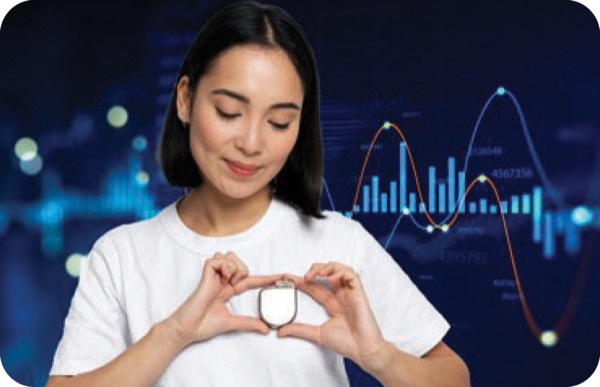
Beyond optimizing medications and dosages to prevent HF complications, Dr. Kwon said, pharmacists can regularly check in with patients to provide education and boost treatment adherence. Pharmacists are also critical partners in interdisciplinary HF treatment teams that may include cardiologists, electrophysiologists and nurses, she added.
After receiving an ICD alert, the pharmacist reviews which heart sensor trends led to the alert, said study co-lead Phuong Denomme, PharmD, a clinical cardiology pharmacist at Kaiser Permanente San Diego. Such measures included S3, thoracic impedance, respiratory rate and heart rate.
“The pharmacist can review the patient’s medical history and recent encounters, medication profile, and laboratory work to form an initial assessment of any correlation to the alert,” Dr. Denomme said. “Following this, the pharmacist can reach out to the patient to assess for signs and symptoms of volume overload and to confirm medication therapy.”
The project arose because half of U.S. HF patients are readmitted to the hospital within six months (Circulation 2020;141[9]:e139-e596), Dr. Kwon noted, with perhaps one-fourth of those readmissions being preventable.
Heart Rhythm Monitoring Tools Helpful When Used Judiciously
Pharmacists, nurse practitioners and physician assistants are all essential to helping patients understand ECG data they receive from smart watches or apps, according to participants in a recent panel sponsored by the Heart Rhythm Society.
The watches or apps monitor people for signs of abnormal cardiac rhythms and send them alerts that they can forward to pharmacists, physicians and other advanced practice providers. For example, using the Kardia app (AliveCor, Mountain View), someone can put their fingers on the back of their smartphone to obtain 6-lead ECG readings (I, II, III, aVL, aVR and aVF). The app then sends an alert if it detects any abnormalities such as atrial fibrillation (AFib) or aberrant electrical signal strength and timing.
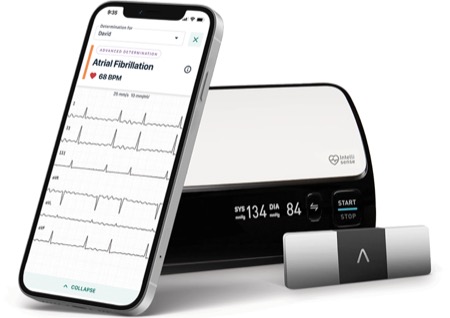
“I’ve had patients with Kardia who got a pretty accurate reading of flutter or even premature beats,” said Kristen Bova Campbell, PharmD, a clinical pharmacy specialist and senior research associate in electrophysiology at Duke University Medical Center, in Durham, N.C.
“There are even cases of outpatient pharmacists using these apps to monitor drug loads, particularly for sotalol,” Dr. Campbell added. Patients who take sotalol to manage cardiac arrhythmias are encouraged but not required to visit their pharmacist for potential dose adjustments, she noted, so remote monitoring provides drug load details that might otherwise be unavailable. The pharmacist would rely on QTc interval measurements, which these tools can provide, to inform dose adjustments and reduce possible toxicity.
In Dr. Campbell’s experience, the primary use case is for patients to send specialists such as herself potentially worrisome ECG readings. Although this information can be helpful to diagnose problems early, it can also be overwhelming for patients and clinicians alike. In many cases an irregular heartbeat will be transitory, and the heart will restore sinus rhythm on its own.
“A lot of times patients will ask us—all the providers in our clinic—whether they should get an Apple Watch or Kardia monitor. We have a very frank conversation with them about how they plan to use it,” Dr. Campbell said. “If it’s going to overtake someone’s life, and they check their rhythm way too frequently, we advise they not get it,” she said.
For patients who choose to get a device, she advised that they use device readings as confirmation of symptoms rather than the first diagnosis.
“We ask people to detect whether they may have AFib using traditional symptoms, and then use the device as a confirmation,” before sending the reading, Dr. Campbell said.
Telehealth Eases Stigma Of Opioid Use Disorder
A qualitative analysis of patient perceptions of stigma and their experiences with it while using telehealth for treatment of opioid use disorder (OUD) revealed that remote care might mitigate some negative experiences, but some concerns remain.
“The forms of stigma experienced by individuals with [OUD] are complex and multifaceted, as are the ways in which those experiences interact with telehealth-based care,” the study authors wrote. “The mixed results of this study support policies allowing for a more individualized, patient-centered approach to care delivery that allows patients a choice over how they receive OUD treatment services.”
A total of 30 participants were included in the study (Harm Reduct J 2024;21[1]:125). The patients had at least one telehealth visit (video/virtual or phone only) for OUD and a prescription for any formulation of buprenorphine for treatment. Participants’ mean age was 40.5 years (range, 20-63 years); 47% were women, 50% were men; and 7% were transgender, non-binary or gender diverse. The majority of the study group (77%) were white, 13% were American Indian/Alaska Native, 17% were Black and 17% were Hispanic/LatinX. Housing instability was common among participants, with nine (30%) having experienced homelessness in the preceding six months.
Patients were asked questions regarding their perceptions of and experiences with stigma and telehealth at the individual, public and structural levels.
At the individual level, it was reported that “telehealth provided [some] participants with a greater sense of agency, allowing them to seek care from within a known, safe environment or to quickly end an uncomfortable encounter.” Similarly, at the public level, telehealth allowed some patients to avoid uncomfortable situations from being seen in public seeking treatment for OUD or missing work for treatment. However, some patients expressed privacy concerns when seeking telehealth and described the clinic as “a more secure environment.”
At the societal level, researchers found that depending on the patient, telehealth alleviated or exacerbated perceptions that their clinician was discriminatory.
The study researchers concluded that “given that aspects of both telehealth and in-person OUD treatment modalities left some participants feeling judged by their clinicians, our findings highlight the need to further explore how clinicians perpetuate stigma through telehealth-based programs, and how training and clinical guidelines could mediate this.”
The sources reported no relevant financial disclosures.